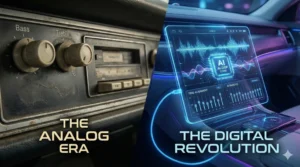
For decades, the peak of car audio customization was a simple “Bass/Treble” slider and perhaps a crude graphic equalizer on a head unit. If you wanted better sound, you turned a plastic knob and hoped for the best. Those days are officially over.
As we move through 2026, the car’s interior is no longer seen as a static space, but as a dynamic acoustic environment that can be digitally manipulated. Welcome to the era of AI-driven acoustic tuning and Digital Signal Processing (DSP). If you haven’t integrated a DSP into your vehicle yet, you aren’t just missing out on sound quality—you are listening to a distorted version of the past.
The Acoustic Nightmare: Why Your Car is Fighting Your Music
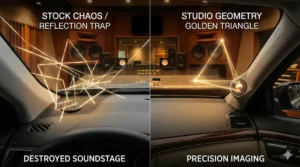
To understand why a DSP is essential, we must first recognize that the interior of a vehicle is an acoustic disaster. Unlike a living room or a recording studio, a car is a cramped box made of reflective glass, sound-absorbing foam, and vibrating plastic.
Furthermore, you—the listener—are never sitting in the center. You are tucked away in the driver’s seat, closer to the left speakers than the right. This creates a “phasing” issue where sound waves from different speakers hit your ears at different times, destroying the soundstage. This is where the physics of sound meets the power of Digital Signal Processing.
What is a DSP? The “Brain” of the Modern Sound System
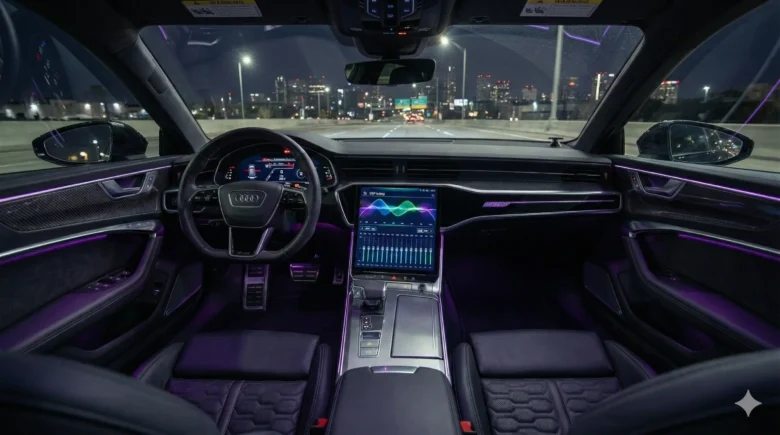
A Digital Signal Processor (DSP) is essentially a high-powered computer dedicated to one task: cleaning, timing, and perfecting the audio signal before it reaches your amplifiers and speakers. In 2026, these units have evolved from complex rack-mounted gear into compact, AI-integrated hubs that you can control entirely from your smartphone.
By taking the raw signal from your factory radio and converting it into a digital stream, the DSP allows for microscopic adjustments that were physically impossible five years ago.
1. The Magic of Time Alignment
This is the “Holy Grail” of car audio. Because you sit closer to the left tweeter than the right one, the sound from the left reaches your ear a few milliseconds faster. Your brain perceives this as a “blurry” sound.
A modern DSP allows you to delay the signal of the closer speakers by fractions of a millisecond. The result? The sound from every speaker hits your ears at the exact same time. Suddenly, the singer isn’t “stuck” in your door panel; they appear to be standing right on your dashboard, in the center of the car. This is known as the Center Image, and once you hear it, you can never go back to stock audio.
2. 31-Band Parametric EQ: Surgical Precision
Standard equalizers allow you to adjust “Bass” or “Mid.” A professional DSP offers a 31-band EQ for each individual speaker. If your driver-side midrange speaker has a harsh resonance at 400Hz due to the plastic door trim, you can surgically cut that specific frequency without affecting the rest of the music.
The AI Revolution: Acoustic Tuning via Smartphone
The biggest shift in 2026 is the integration of Artificial Intelligence in the tuning process. Previously, tuning a DSP required an expensive RTA (Real-Time Analyzer) microphone and hours of professional labor.
Today’s top-tier DSP units use your smartphone’s high-fidelity microphones combined with AI cloud processing to “auto-tune” your cabin. The software plays a series of test tones, analyzes the reflections in your specific vehicle model, and automatically applies the optimal EQ curves and time delays. It’s like having a world-class sound engineer living inside your dashboard.
Why This is a High-Value Automotive Investment
Beyond the auditory pleasure, upgrading to an AI-driven DSP system is a smart Automotive Asset move. Modern vehicles are increasingly difficult to modify because the factory screens control everything from climate to navigation. You can’t just “swap the radio” anymore.
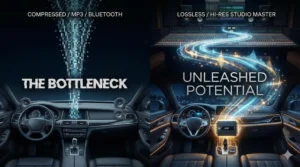
A DSP acts as an integration bridge. It takes the “dirty” factory signal—which often has bass roll-off to protect cheap factory speakers—and flattens it into a high-fidelity, full-range signal. This allows you to keep your factory dash looking original while enjoying a studio-grade experience, preserving the resale value and aesthetic of the car.
Top 3 DSP Units to Revolutionize Your Sound in 2026
If you are looking to cross the bridge into the future of car audio, these three categories of units are leading the market:
1. The All-in-One DSP Amplifier
Ideal for stealth installs and modern EVs (Electric Vehicles) where space and power consumption are critical. These units combine a multi-channel amplifier with a powerful DSP chip.
- Why it’s a winner: It simplifies the Car Audio Installation process by reducing the number of wires and components. Brands like Helix and Mosconi are leading this space with AI-assisted software.
2. Standalone High-Resolution Processors
For the true audiophile who wants to choose their own amplifiers. These units offer the highest bit-rate processing (up to 192kHz/32-bit).
- Target Audience: Owners of high-end builds using premium component speakers like Focal or Morels.
3. The Smartphone-Centric Entry Level
A new breed of DSPs designed for the DIY enthusiast. These units prioritize a “Plug & Play” experience with an extremely intuitive mobile app.
- Key Feature: AI-guided setup that walks the user through the tuning process in under 15 minutes.
Professional Installation vs. The DIY AI Route
While AI has made tuning more accessible, the Professional Installation of a DSP still carries significant weight, especially concerning Car Insurance and warranties. High-end audio builds involve complex wiring into the vehicle’s main power bus.
A professional installer ensures that the system is fused correctly and that the integration doesn’t interfere with the vehicle’s sophisticated ECU (Electronic Control Unit). For 2026 luxury vehicles, we always recommend a professional “base install” followed by AI-driven fine-tuning.
The Financial Logic: ROI in Sound
When we talk about a “Franquia Lucrativa” (a lucrative venture) in the automotive world, we talk about the Return on Investment. Investing in a high-quality DSP is one of the few audio upgrades that can move with you. Most modern DSPs are “universal”—if you sell your car, you can remove the DSP and install it in your next vehicle, instantly upgrading the new car’s sound.
Moreover, because a DSP makes cheap speakers sound “good” and good speakers sound “incredible,” it is often a more cost-effective upgrade than simply buying more expensive speakers without a way to control them.
Conclusion: Don’t Listen to the Past
The transition from analog to AI-driven digital audio is the single biggest leap in automotive technology this decade. By correcting the inherent flaws of a car’s interior, a DSP unlocks the true potential of your music.
If you are still relying on factory settings or basic head unit adjustments, you are only hearing a fraction of what your favorite artists intended. The era of the knob is over. The era of precision, AI-controlled sound has arrived.
Are you ready to calibrate your ride?
FAQ:
Below, we answer the most common questions from those ready to move from analog tuning to the era of intelligent sound.
1. Do I really need a DSP if I already have high-quality aftermarket speakers?
Yes. Owning premium speakers (like Focal, JL Audio, or Ground Zero) without a DSP is like buying a Ferrari and only driving it on dirt roads. A car’s interior is acoustically asymmetrical; without the Time Alignment that only a DSP provides, sound reaches your ears at different times, destroying the soundstage. The DSP is the “brain” that ensures you extract 100% of the potential from your hardware investment.
2. Will installing a DSP void my vehicle’s warranty?
Compliance Risk: Medium. If the installation is done by an amateur cutting into original wiring harnesses, yes, you could face issues with your warranty and even your Car Insurance. However, the 2026 trend is Plug & Play T-Harnesses. These allow the DSP to integrate into the factory system without cutting a single wire. We always recommend professional installation to ensure your vehicle’s electrical system and ECU remain intact.
3. Is AI-driven smartphone tuning as good as a professional manual tune?
For 90% of users, yes. Cloud-based processing technology has evolved drastically. By using the high-fidelity microphones found in modern smartphones, AI software can identify resonance peaks and phase cancellations with precision that would take a human hours to achieve. However, for ultra-high-end competition systems, the “golden ear” of a master sound engineer still provides that final, elite touch.
4. Is it worth installing a DSP while keeping the original factory radio?
Absolutely. In fact, this is one of the primary reasons to buy a DSP today. Many modern vehicles have dashboard-integrated radios that are impossible to replace. These factory units often come with “dirty” equalization designed to protect cheap paper speakers. A DSP performs De-Equalization, stripping away those factory limitations and delivering a clean, flat, high-fidelity signal to your amplifiers.
5. Is a DSP a good financial investment for my car?
From an ROI (Return on Investment) perspective, a DSP is one of the smartest components you can buy. Unlike heavy subwoofers or custom-molded enclosures that are difficult to resell, a DSP is a compact, universal electronic module. If you sell your car, you can easily remove it and install it in your next vehicle, instantly upgrading the new car’s sound. It protects your capital by ensuring your “audio assets” stay with you.