Introduction
There is something almost magical about an Italian dinner. The moment the aroma of garlic and olive oil hits the air, something shifts, conversations get warmer, laughter comes easier, and everyone around the table seems to relax into the kind of comfort that only good food can create. Italian cuisine has this extraordinary ability to feel simultaneously rustic and refined, humble and luxurious. And the best part? You do not need to fly to Rome to experience it. You just need the right recipes and a little bit of heart.
If you have ever wanted to host a dinner party that feels genuinely special, the kind people talk about on the drive home, an Italian pasta menu is your most reliable bet. Pasta is forgiving, endlessly versatile, and carries flavor in a way that few other dishes can match. Paired with the right starter, sides, and a show-stopping dessert, it creates a complete dining experience that feels curated and intentional, even when it comes together in your own kitchen without professional training.
In this article, you will find a complete Italian pasta dinner menu, from a stunning bruschetta starter all the way to a silky, coffee-soaked tiramisù, designed specifically for home cooks who want elegant results without the culinary school price tag. Every recipe has been chosen to work together as a cohesive experience, building flavor from the first bite to the last. Tie on your apron, pour yourself a small glass of something Italian, and let’s build the most beautiful dinner you have ever hosted. It starts right here.
Why Italian Pasta is the Perfect Choice for an Elegant Dinner
Before diving into the recipes, it is worth understanding why pasta earns its place at the center of a sophisticated dinner, because it is not just about convenience or familiarity, even though it delivers both generously.
Italian pasta carries centuries of culinary wisdom in its simplest forms. Each region of Italy developed its own pasta traditions based on local ingredients, climate, and culture, and what emerged from that history is a collection of dishes that have been refined over generations to achieve a near-perfect balance of flavor, texture, and visual appeal. When you serve a well-made tagliatelle with a rich, slow-cooked ragù, you are connecting your guests to something much larger than a Tuesday night dinner.
For beginners, pasta offers one of the most forgiving learning curves in cooking. The fundamental techniques, boiling pasta correctly, building a sauce with patience, finishing with pasta water, are learnable in a single evening and reproducible every time after. Unlike a soufflé or a perfectly seared duck breast, pasta does not punish minor mistakes harshly. It rewards attention and love, which is exactly what home cooking is all about.
And from a hosting perspective, pasta is a dream. Most sauces improve with time and can be made in advance, the pasta itself cooks in minutes, and the presentation, a generous twirl of tagliatelle in a wide bowl, finished with a drizzle of truffle oil and a shower of fresh herbs, is naturally beautiful without any plating tricks required.
Complete Menu Overview
Here is the full picture of the dinner you are about to create:
| Course | Dish |
| Starter | Tricolore Bruschetta with Tomato, Pesto and Whipped Ricotta |
| Main Course | Tagliatelle with Wild Mushroom Ragù and Truffle Oil |
| Side 1 | Ciabatta Bread with Roasted Garlic Herb Butter |
| Side 2 | Italian Caesar Salad with Homemade Croutons |
| Side 3 | Grilled Vegetable Antipasto with Truffle Oil |
| Dessert | Classic Tiramisù with a Limoncello Twist |
This menu was designed with intentional flavor progression, from the bright, fresh acidity of the bruschetta through the deep umami richness of the mushroom ragù, finishing with the bittersweet elegance of tiramisù. Every dish speaks Italian, and together they tell a complete story.
Starter: Tricolore Bruschetta with Tomato, Pesto and Whipped Ricotta
The starter that sets the tone for the entire evening
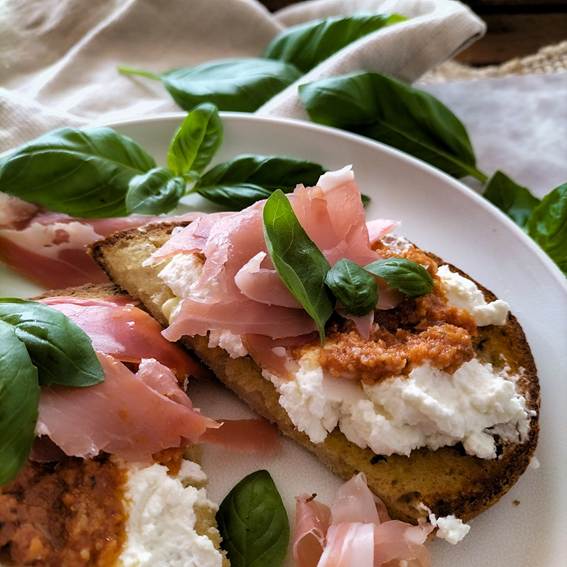
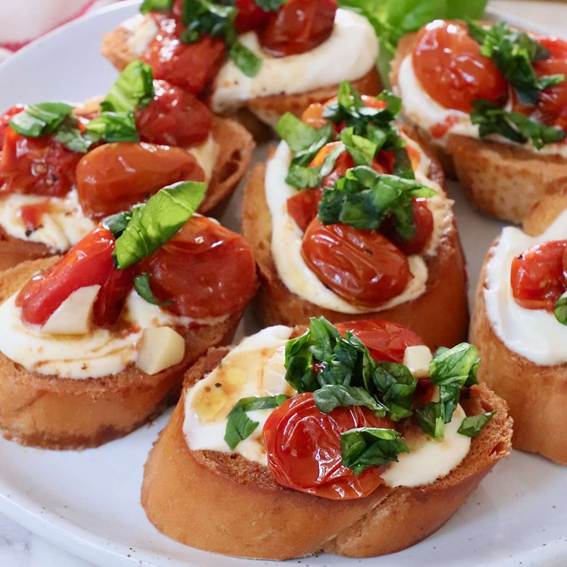
A great starter does two things simultaneously: it wakes up the palate and it makes a promise about the rest of the meal. This tricolore bruschetta, inspired by the colors of the Italian flag, delivers on both counts with flying colors. Three different toppings on golden, garlicky toasted bread create visual drama and a variety of flavors that immediately signal to your guests that this is not an ordinary dinner.
Ingredients (serves 4):
For the bread base:
- 1 good-quality ciabatta or sourdough baguette, sliced diagonally
- 2 whole garlic cloves (for rubbing)
- Extra virgin olive oil
- Flaky sea salt
Topping 1 — Classic Tomato (Red):
- 3 ripe Roma tomatoes, finely diced
- 6 fresh basil leaves, torn
- 1 tablespoon extra virgin olive oil
- 1 teaspoon balsamic vinegar
- Salt and black pepper to taste
Topping 2 — Basil Pesto (Green):
- 4 tablespoons good-quality basil pesto (store-bought is perfectly fine)
- Cherry tomatoes halved, for garnish
- Pine nuts, lightly toasted
Topping 3 — Whipped Ricotta (White):
- 200g fresh ricotta
- 1 tablespoon extra virgin olive oil
- Zest of 1 lemon
- 1 teaspoon honey
- Salt, white pepper and fresh thyme to finish
Method:
Toast the bread slices in a preheated oven at 200°C (390°F) for 8 minutes until deeply golden and crisp all the way through. While still hot, rub each slice firmly with the cut side of a raw garlic clove — this simple step perfumes the bread in a way that no garlic butter can replicate.
For the tomato topping: combine the diced tomatoes with basil, olive oil, balsamic vinegar, salt and pepper. Let it sit for at least 10 minutes for the flavors to marry.
For the whipped ricotta: beat the ricotta vigorously with a fork or small whisk, adding the olive oil gradually until it becomes noticeably lighter and creamier. Add the lemon zest, honey, salt and pepper.
To assemble: arrange the toasted slices on a long wooden board. Spread whipped ricotta on one third, spoon the pesto generously on another third, and top the remaining with the marinated tomatoes. Garnish each section accordingly and finish everything with a generous drizzle of your best olive oil and a sprinkle of flaky salt.
Pro tip:
The bread can be toasted up to 2 hours in advance and kept at room temperature uncovered — it actually gets crispier as it cools. Only add the toppings 10 minutes before serving to prevent the bread from going soggy.
Main Course: Tagliatelle with Wild Mushroom Ragù and Truffle Oil
The undisputed star of the evening
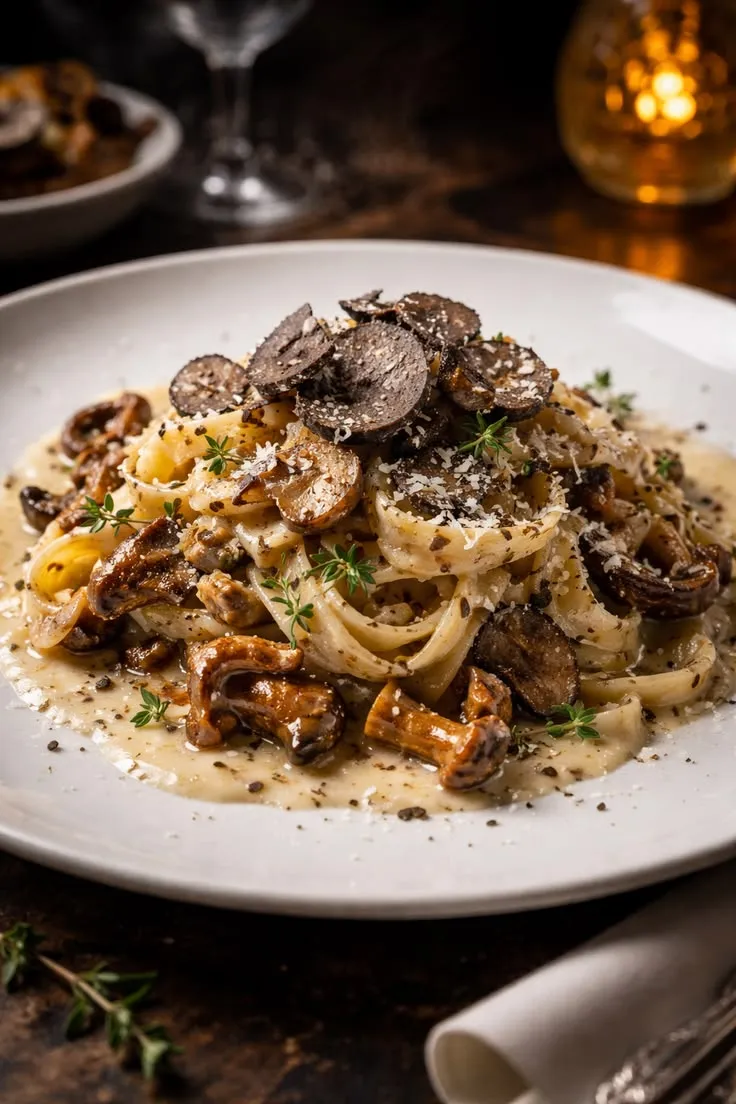
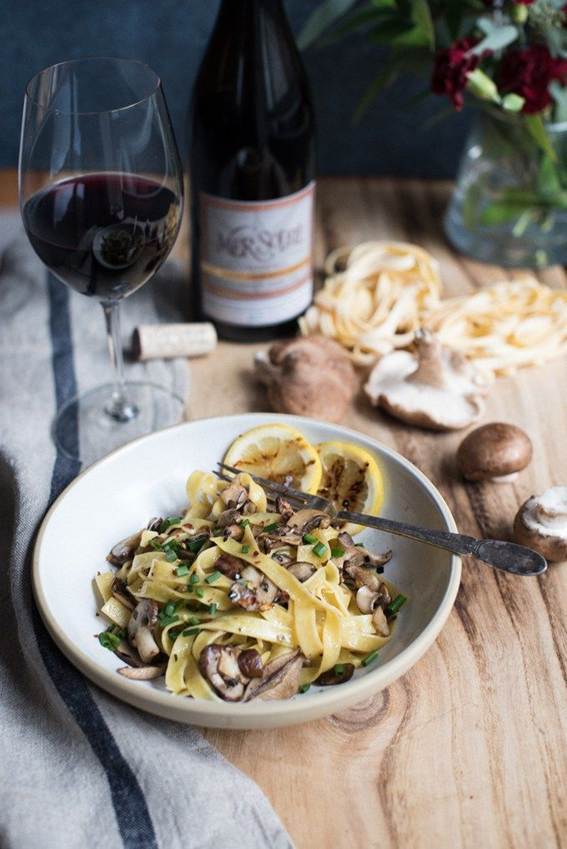
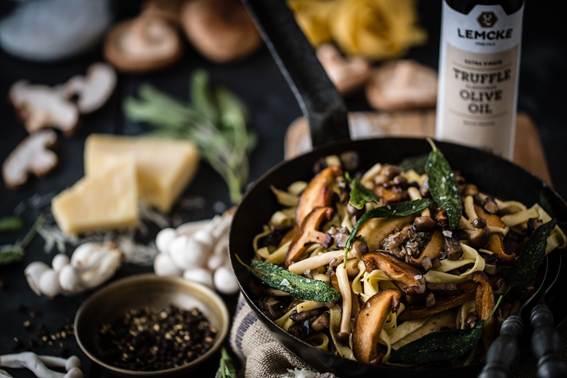
This is the dish that will make your guests go quiet for a few seconds after the first bite — that particular silence that only happens when food is genuinely exceptional. A slow-built mushroom ragù with layers of umami depth, finished with a whisper of truffle oil and draped over silky egg tagliatelle, is Italian cooking at its most poetic. It is hearty without being heavy, sophisticated without being fussy, and deeply satisfying in the way that only pasta can be.
Ingredients (serves 4):
- 400g dried egg tagliatelle (or 500g fresh)
- 500g mixed mushrooms — cremini, shiitake and portobello work beautifully together
- 30g dried porcini mushrooms
- 1 medium white onion, finely diced
- 4 garlic cloves, minced
- 150ml dry white wine
- 200ml vegetable or chicken stock
- 100ml heavy cream
- 2 tablespoons extra virgin olive oil
- 2 tablespoons unsalted butter
- Fresh thyme and rosemary
- 1 tablespoon tomato paste
- 50g freshly grated Parmigiano Reggiano
- Truffle oil, to finish
- Fresh flat-leaf parsley, chopped
- Salt and freshly cracked black pepper
- Reserved pasta cooking water (essential)
Method:
Building the mushroom base: Start by rehydrating the dried porcini in 200ml of just-boiled water for 15 minutes. This step is transformative, porcini release an intensely savory, almost meaty liquid that becomes the backbone of your sauce. Reserve the soaking liquid, but pour it carefully, leaving any grit behind at the bottom.
Slice the fresh mushrooms into chunky, irregular pieces, not too thin. Mushrooms need surface area to brown properly, and thicker pieces retain their texture through the cooking process.
In a large, wide pan, a Dutch oven is ideal, heat the olive oil and butter together over high heat. Add the fresh mushrooms in a single layer and resist every urge to stir for 3 full minutes. This patience creates the golden-brown crust that unlocks mushrooms’ deepest flavor. Season, toss, and cook for another 2 minutes. Remove and set aside.
Building the ragù: In the same pan over medium heat, sauté the onion in a touch more olive oil for 8 minutes until soft, translucent and slightly golden. Add the garlic and cook for 1 minute. Add the tomato paste and cook for 2 minutes, stirring constantly — this step caramelizes the paste slightly and removes its raw edge. Add the rehydrated porcini (roughly chopped) and pour in the soaking liquid through a fine strainer.
Pour in the white wine and let it bubble vigorously for 3 minutes until almost completely reduced. Add the stock, fresh thyme and rosemary. Return the sautéed mushrooms to the pan. Reduce heat to low and simmer uncovered for 20 minutes, stirring occasionally, until the sauce has thickened and deepened in color and flavor.
Stir in the heavy cream and cook for 3 more minutes. Taste and adjust seasoning generously, this sauce should be bold, rich and deeply savory.
Cooking and finishing the pasta: Bring a large pot of water to a rolling boil. Salt it aggressively, the water should taste like a pleasantly seasoned broth. Cook the tagliatelle according to package instructions, but start tasting 2 minutes early. Reserve 2 cups of the starchy pasta water before draining.
Add the drained pasta directly to the mushroom ragù over medium heat. Toss vigorously, adding pasta water a splash at a time until the sauce coats every strand in a glossy, cohesive emulsion. Add the Parmigiano and toss again.
Serve immediately in wide, warmed bowls. Finish each portion with a delicate drizzle of truffle oil, a few extra shavings of Parmigiano and a shower of fresh parsley. The truffle oil goes on last and never gets cooked, heat destroys its fragrance entirely.
Pro tip:
Always warm your serving bowls before plating pasta, cold bowls drop the temperature of the dish within minutes. Simply fill them with hot water for 2 minutes while the pasta finishes cooking, then dry quickly before plating. It is a restaurant detail that makes a real difference at the table.
Side 1: Ciabatta Bread with Roasted Garlic Herb Butter
The side dish everyone fights over
There is an unwritten rule at Italian dinners: there must always be excellent bread on the table. Not as an afterthought, as a deliberate, delicious component of the experience. This ciabatta with roasted garlic herb butter is so good it could stand alone as a starter, and it serves the additional practical purpose of giving your guests something wonderful to do while you finish the pasta.
Ingredients (serves 4 to 6):
- 2 good-quality ciabatta loaves
- 1 whole head of garlic
- 120g unsalted butter, room temperature
- 2 tablespoons fresh flat-leaf parsley, finely chopped
- 1 tablespoon fresh chives, finely chopped
- 1 teaspoon fresh thyme leaves
- Zest of half a lemon
- Flaky sea salt and black pepper
- Olive oil, for roasting the garlic
Method:
Slice the top off the garlic head to expose the cloves. Drizzle with olive oil, wrap in foil and roast in a 180°C (350°F) oven for 40 minutes until the cloves are completely soft, golden and caramelized. Squeeze the roasted garlic out of the skins, it should come out like a paste.
Beat the softened butter with the roasted garlic paste, all the fresh herbs, lemon zest, salt and pepper until fully combined and beautifully fragrant. Taste it. You will want to eat it with a spoon, that is exactly right.
Split the ciabatta loaves lengthwise, spread the herb butter generously over the cut surface and place on a baking sheet, butter side up. Bake at 200°C (390°F) for 10 to 12 minutes until the edges are golden and crisp and the butter is bubbling. Slice into portions and serve immediately, ideally wrapped in a linen napkin to keep warm.
Pro tip:
The roasted garlic butter can be made up to 5 days in advance and stored in the refrigerator, or rolled into a log in plastic wrap and frozen for up to 3 months. Having it on hand transforms weeknight dinners and last-minute hosting with minimal effort.
Side 2: Italian Caesar Salad with Homemade Croutons
The salad that actually belongs at this table
A salad at an Italian dinner serves a specific purpose: it provides freshness and acidity that cuts through the richness of the pasta and bread, refreshing the palate between bites. This Italian-inflected Caesar, with a dressing built on anchovies, lemon and real Parmigiano — does exactly that, while feeling completely at home alongside the rest of the menu.
Ingredients (serves 4):
For the salad:
- 2 heads of romaine lettuce, inner leaves only
- 60g Parmigiano Reggiano, shaved with a vegetable peeler
- Freshly cracked black pepper
For the Italian Caesar dressing:
- 3 anchovy fillets in olive oil
- 1 large garlic clove
- 2 tablespoons fresh lemon juice
- 1 teaspoon Dijon mustard
- 1 teaspoon Worcestershire sauce
- 100ml extra virgin olive oil
- 3 tablespoons freshly grated Parmigiano
- Salt and black pepper to taste
For the homemade croutons:
- 3 thick slices of day-old ciabatta or sourdough, torn into rough chunks
- 3 tablespoons olive oil
- 1 garlic clove, minced
- Pinch of dried oregano and flaky salt
Method:
For the croutons: toss the torn bread with olive oil, garlic, oregano and salt. Spread on a baking sheet and bake at 190°C (375°F) for 12 to 15 minutes, turning once, until golden and crunchy all the way through. Cool completely before using, they continue to crisp as they cool.
For the dressing: use the back of a fork to mash the anchovies and garlic together into a smooth paste on a cutting board. Transfer to a bowl and whisk in the lemon juice, mustard and Worcestershire. Add the olive oil in a slow, steady stream while whisking constantly to emulsify. Stir in the grated Parmigiano. Season to taste.
To assemble: tear the romaine into large pieces and place in a wide bowl. Drizzle with just enough dressing to coat, never drench. Toss gently, add the croutons and top with generous shavings of Parmigiano and cracked black pepper. Serve immediately.
Pro tip:
The dressing keeps beautifully in the refrigerator for up to 3 days, make it in advance for stress-free hosting. The croutons can be made 2 days ahead and kept in an airtight container at room temperature.
Side 3: Grilled Vegetable Antipasto with Truffle Oil
Color, elegance and Italian soul on one plate
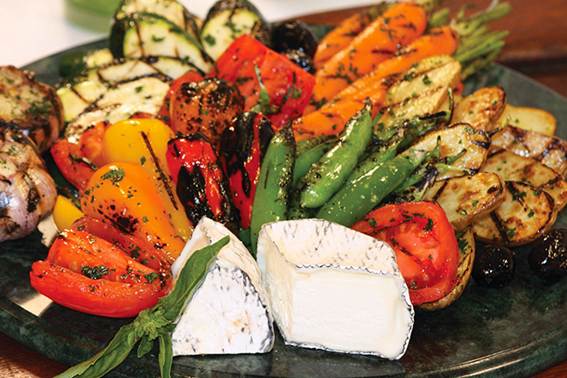
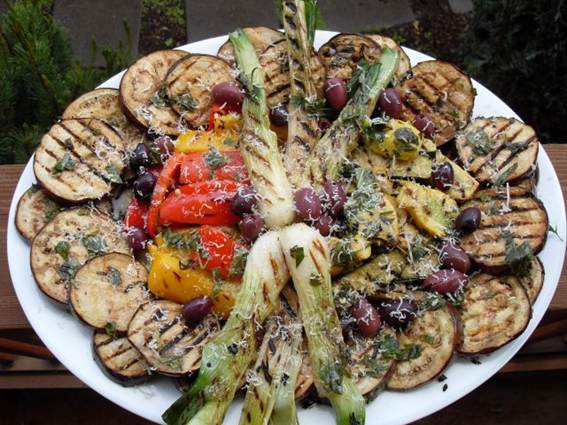
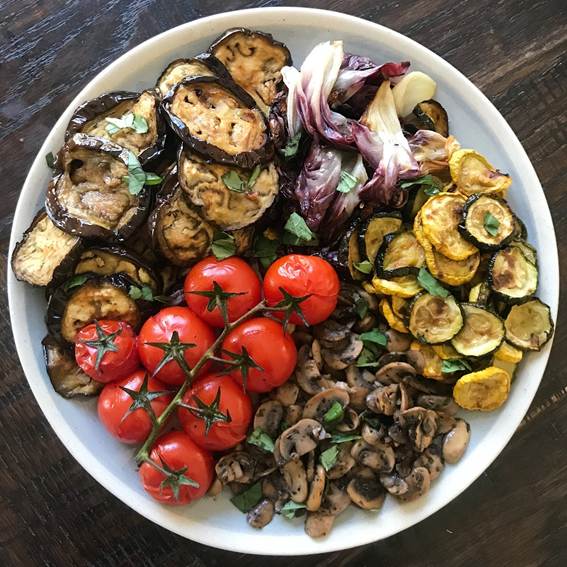
An antipasto of beautifully grilled vegetables is one of the most visually striking things you can put on a dinner table — and one of the easiest. The char marks, the jewel-toned colors of zucchini, eggplant and red peppers, and the glistening finish of good olive oil create a platter that looks like it belongs in a trattoria in Tuscany. The whisper of truffle oil at the end ties it thematically to the main course.
Ingredients (serves 4 to 6):
- 2 medium zucchini, sliced lengthwise into thin planks
- 1 large eggplant, sliced into rounds
- 2 red bell peppers, quartered and seeded
- 1 bunch of asparagus, woody ends removed
- Extra virgin olive oil
- Truffle oil, to finish
- 2 garlic cloves, thinly sliced
- Fresh basil and flat-leaf parsley
- Flaky sea salt and freshly cracked black pepper
- Aged balsamic vinegar or balsamic glaze, to finish
Method:
Brush all the vegetables generously with olive oil and season with salt and pepper. Heat a grill pan or outdoor grill to high heat — it should be properly hot before the vegetables touch the surface. Grill each vegetable in batches, without crowding, for 3 to 4 minutes per side until tender with visible char marks.
As they come off the grill, layer them on a large serving platter. While still warm, scatter the sliced garlic and fresh herbs over the top. The warmth of the vegetables will gently perfume with the garlic without making it harsh.
Just before serving, finish with a light drizzle of truffle oil, a few drops of aged balsamic and a final pinch of flaky sea salt.
Pro tip:
This dish is genuinely better at room temperature than piping hot, which makes it the perfect make-ahead side. Grill the vegetables up to 3 hours in advance, assemble on the platter, cover loosely with plastic wrap and let them marinate in their own juices until serving time.
Dessert: Classic Tiramisù with a Limoncello Twist
The grand finale that no one will ever forget
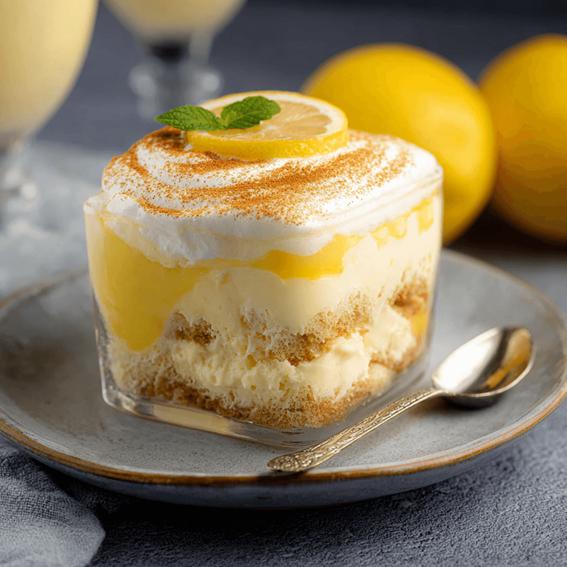
A proper Italian dinner cannot, must not, end without tiramisù. It is arguably the most beloved Italian dessert in the world, and for excellent reason: the combination of espresso-soaked ladyfingers, silky mascarpone cream, and a generous cloud of dark cocoa powder is so perfectly conceived that it has remained virtually unchanged since its creation in the Veneto region in the 1960s. The limoncello twist here is subtle — just a spoonful stirred into the cream — but it adds a brightness that lifts the whole dessert and makes it feel just a little bit unexpected.
Ingredients (serves 8):
- 500g mascarpone cheese, room temperature
- 4 large eggs, yolks and whites separated
- 100g caster sugar
- 2 tablespoons limoncello (or 1 teaspoon vanilla extract for a non-alcoholic version)
- 300ml freshly brewed espresso, cooled completely
- 2 tablespoons dark rum or coffee liqueur (optional)
- 250g savoiardi ladyfinger biscuits
- Unsweetened dark cocoa powder, for dusting
- Dark chocolate shavings, to garnish
Method:
Making the mascarpone cream: Beat the egg yolks with the sugar using a hand mixer for 5 full minutes until the mixture turns pale, thick and nearly doubled in volume — this is the essential step that gives the cream its structure and silkiness. Add the mascarpone in three additions, mixing gently on low speed until just combined. Stir in the limoncello.
In a separate clean bowl with clean beaters, whip the egg whites with a pinch of salt to stiff, glossy peaks. Fold the egg whites into the mascarpone mixture in three gentle additions using a large spatula, working from the bottom up to preserve as much air as possible. The final cream should be cloud-like and hold its shape while remaining impossibly smooth.
Assembling the tiramisù: Mix the cooled espresso with the rum or coffee liqueur in a shallow bowl. Working quickly, dip each ladyfinger into the espresso mixture for no more than 1 to 2 seconds per side, they should be soaked but not disintegrating. Arrange a single layer in a rectangular dish or individual glasses.
Spread half the mascarpone cream over the ladyfingers in an even layer. Add a second layer of dipped ladyfingers, then top with the remaining cream, smoothing the surface neatly. Cover with plastic wrap and refrigerate for a minimum of 6 hours, overnight is ideal and produces a significantly better result.
Just before serving, dust generously with cocoa powder through a fine sieve and scatter dark chocolate shavings over the top. For individual glasses, add a single rolled wafer or a small piece of dark chocolate as a finishing touch.
Pro tip:
Tiramisù is one of those rare desserts that actively improves with time, the overnight rest allows all the flavors to meld and the cream to set into that signature sliceable-yet-creamy texture. Making it the day before is not just a convenience, it is the correct decision.
Wine Pairing: The Perfect Italian Bottles for This Menu
An Italian menu deserves Italian wine, and fortunately, Italy produces some of the world’s most food-friendly bottles at every price point:
| Course | Recommended Wine | Alternative |
| Starter (bruschetta) | Pinot Grigio delle Venezie | Prosecco Brut |
| Main course (mushroom ragù) | Barolo or Barbera d’Asti | Chianti Classico |
| Throughout the dinner | Sangiovese-based Rosso | Montepulciano d’Abruzzo |
| Dessert (tiramisù) | Moscato d’Asti | Vin Santo |
| Non-alcoholic option | Sparkling water with lemon and fresh rosemary | San Pellegrino Aranciata |
A note on the main course pairing: the wild mushroom ragù with truffle oil is a deeply umami-forward dish that pairs beautifully with medium to full-bodied Italian reds. A Barbera d’Asti — with its bright acidity, low tannins and dark fruit profile, is perhaps the most complementary choice, as its acidity cuts through the cream while harmonizing with the earthiness of the mushrooms. A Chianti Classico works wonderfully as a more accessible and widely available option.
Planning Timeline: How to Execute This Menu Without Breaking a Sweat
The secret weapon of every successful dinner party is organization. Here is your complete timeline:
The day before:
- Prepare the tiramisù completely and refrigerate overnight
- Make the roasted garlic herb butter and refrigerate
- Prepare the Caesar dressing and refrigerate
- Bake the croutons and store in an airtight container
3 hours before:
- Grill the antipasto vegetables and assemble on the platter, leave at room temperature
- Prepare the bruschetta toppings and refrigerate separately
- Brew and cool the espresso if you had not already
1 hour before:
- Take the mascarpone butter out of the refrigerator to soften
- Set the table and prepare serving dishes
- Prepare all mise en place for the pasta (measure, chop, portion)
30 minutes before:
- Toast the bruschetta bread and prepare the serving board
- Prepare the ciabatta for the oven — ready to bake when guests arrive
When guests arrive:
- Assemble and serve the bruschetta immediately
- Put the ciabatta in the oven (it will be ready within 12 minutes)
- Begin the pasta sauce final simmer and bring pasta water to a boil
During the meal:
- Cook the tagliatelle while guests enjoy the starter
- Dress and toss the Caesar salad at the last moment
- Dust the tiramisù with cocoa powder just before dessert service
The Secret to an Elegant Italian Table at Home
The food is only half of the experience, the atmosphere you create around it matters enormously. A few simple details transform a dinner into an event:
Candles, always: Nothing creates warmth and intimacy at a dinner table faster than candlelight. Simple pillar candles or a collection of tea lights down the center of the table cost very little and transform the entire atmosphere. Choose unscented candles so they do not compete with the aromas of the food.
White linen napkins: They do not need to be expensive or perfectly pressed. A white or ivory linen napkin at each place setting instantly elevates the table and signals to your guests that this meal was prepared with care and intention.
Fresh herbs as decoration: A small bunch of fresh rosemary, basil or thyme placed casually in a glass jar as a centerpiece is both beautiful and thematic. It connects the table visually to the food and fills the room with a subtle, appetizing fragrance.
Music matters: A carefully chosen Italian playlist, think classic Neapolitan songs, a little Ennio Morricone, some contemporary Italian jazz, sets a mood that no decoration can replicate. Start it softly before guests arrive and let it run quietly throughout the evening.
Serve family style where possible: Italian dining is inherently communal. Placing the antipasto platter, the bread and the salad in the center of the table for guests to help themselves creates that convivial, generous atmosphere that is the soul of Italian hospitality.
Common Mistakes When Cooking Italian Pasta (and How to Avoid Them)
Even with excellent recipes, a few familiar errors can undermine the result. Here is what to watch for:
Under-salting the pasta water: This is the single most common pasta mistake. The water should taste like well-seasoned broth, not the ocean, but genuinely salty. Pasta cooked in under-salted water tastes flat no matter how good the sauce is, because the seasoning cannot be added back afterward.
Rinsing cooked pasta: Never, ever rinse pasta after cooking. The starchy surface of freshly drained pasta is what allows the sauce to cling and emulsify. Rinsing washes that away completely and leaves you with pasta swimming in sauce rather than coated by it.
Overcooking the pasta: Always taste the pasta starting 2 minutes before the package time. Al dente, with a very slight firmness at the center, is not just a stylistic preference, it is the correct texture for pasta that will continue cooking briefly in the hot sauce.
Adding truffle oil too early: Truffle oil is extraordinarily heat-sensitive. Any heat at all destroys its volatile aromatic compounds. It should always be added as a finishing drizzle, directly over the plated dish, never into the cooking pan.
Rushing the mushroom browning: Mushrooms release a significant amount of water when they hit heat. If you crowd the pan or stir too early, they steam instead of browning. Work in batches, use high heat and practice the patience that proper browning requires, the flavor difference is enormous.
Conclusion
A complete Italian pasta dinner is one of the most rewarding things you can create in a home kitchen. It is generous, beautiful, deeply satisfying and, perhaps most importantly, it creates the kind of table where people linger long after the plates are cleared. With the tricolore bruschetta opening the evening on a bright, fresh note, the wild mushroom tagliatelle delivering that unforgettable main course moment, the supporting sides building texture and variety around it, and the tiramisù closing everything with quiet perfection, this menu tells a complete story from the first bite to the last. You do not need professional training to tell that story beautifully. You just needed the right recipes. Now you have them. Buon appetito!
Frequently Asked Questions (FAQ)
1. Can I make fresh pasta instead of dried for this recipe? Absolutely, and fresh egg tagliatelle will elevate the dish even further. Fresh pasta cooks in just 2 to 3 minutes and has a silkier, more delicate texture that pairs beautifully with a cream-enriched ragù. If making it from scratch feels like too much on a dinner party day, many specialty grocery stores sell excellent fresh pasta that requires no more effort than opening a package.
2. What can I substitute for mascarpone in the tiramisù? If mascarpone is unavailable, a combination of full-fat cream cheese and heavy cream works as a reasonable substitute, use 300g of cream cheese blended smooth with 100ml of whipped heavy cream. The flavor will be slightly tangier and less rich, but the texture and structure will be very similar. Avoid fat-reduced versions of either ingredient, as they will not set properly.
3. Is there a vegetarian version of this entire menu? The menu as written is almost entirely vegetarian already, the main pasta dish contains no meat. The only items to check are the Caesar dressing (which contains anchovies and Worcestershire sauce) and the croutons (which are vegan as written). Simply omit the anchovies from the dressing and add an extra teaspoon of capers for a similar briny depth, and swap the Worcestershire for soy sauce.
4. How far in advance can I prepare the mushroom ragù? The ragù actually improves dramatically when made 1 to 2 days in advance, the flavors deepen and meld beautifully overnight. Store it covered in the refrigerator and reheat gently over low heat, adding a splash of stock or pasta water to loosen it back to the right consistency before tossing with freshly cooked pasta.
5. What is the best way to serve this menu for a larger group, say 8 to 10 people? All recipes in this menu scale well. Simply multiply ingredients proportionally. For larger groups, consider serving the tagliatelle from a large, warmed serving bowl family style rather than plating individually — it is more practical and creates a wonderfully convivial, authentically Italian atmosphere. Make the tiramisù in a larger dish rather than individual servings, as it is much easier to portion at the table.