Introduction
For the practical and organized host, the thought of serving pork ribs at an elegant dinner party might seem unconventional. Ribs often conjure images of casual backyard barbecues and sticky fingers — far removed from the refined ambiance you envision. However, with the right approach, pork ribs can be transformed into a show-stopping centerpiece: a dish that combines comforting familiarity with sophisticated flavors and impeccable presentation.
This guide is crafted to empower the discerning host to orchestrate a memorable dining experience where succulent, fall-off-the-bone pork ribs take center stage — all while maintaining your composure and genuinely enjoying the company of your guests.
Every detail is accounted for here, from the perfectly cooked main course to the harmonious side dishes and a truly decadent dessert. Each step is clear, manageable, and designed for strategic preparation, allowing you to minimize last-minute stress and maximize your enjoyment of the evening. Forget the notion that elegance demands complexity. Here, sophistication is achieved through thoughtful planning and masterful execution.
The Art of Effortless Elegance: Why Ribs Can Be Refined
Pork ribs possess an inherent charm that, when properly harnessed, can elevate them to the pinnacle of elegant dining. The key lies in understanding how to transform this beloved comfort food into a dish that is refined in flavor and sophisticated in presentation.
Five Principles That Make Ribs Dinner-Party Worthy
1. Slow-Cooking for Supreme Tenderness
The secret to elegant ribs is not speed, but patience. Slow-roasting ensures the meat becomes incredibly tender — almost falling off the bone — which is the hallmark of a well-prepared dish. This method also allows for significant make-ahead potential, dramatically reducing day-of stress.
2. Sophisticated Flavor Profiles
Move beyond traditional barbecue sauces. Glazes and rubs that incorporate complex flavors — balsamic vinegar, herbs, whole spices, or a hint of fruit — elevate the taste and deliver a more refined culinary experience.
3. Precise Portioning and Presentation
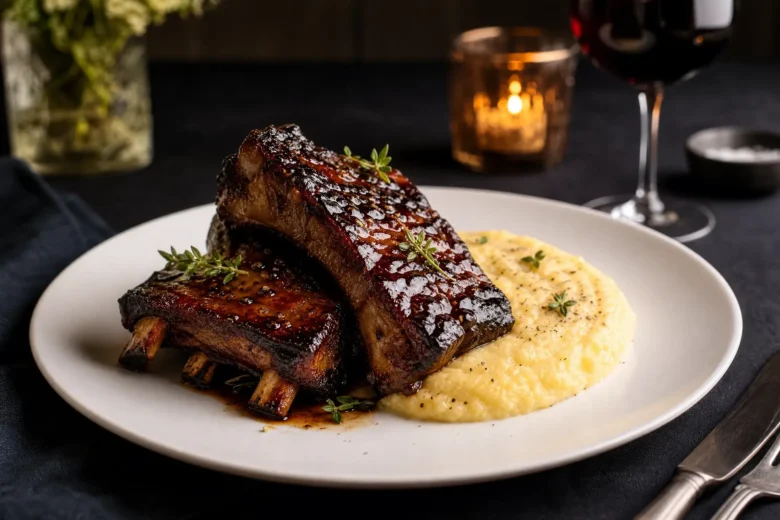
Instead of serving a whole rack, present individual portions or neatly cut sections. A delicate drizzle of sauce and a sprinkle of fresh herbs replace the generous slather, turning each plate into a composed, elegant arrangement.
4. Harmonious Side Dishes
The accompanying dishes define the meal’s overall register. Creamy polenta, crisp roasted vegetables, or a light fresh salad balance the richness of the ribs and create a cohesive, sophisticated menu.
5. Strategic Preparation
The beauty of slow-cooked ribs is that much of the work can be done in advance. Preparing the ribs a day or two ahead and simply reheating and glazing before serving allows you to remain calm and focused on your guests rather than your kitchen.
The Complete Menu at a Glance
| Course | Dish |
|---|---|
| Main Course | Slow-Roasted Balsamic Glazed Pork Ribs |
| Side Dish 1 | Creamy Parmesan Polenta |
| Side Dish 2 | Roasted Asparagus with Lemon Zest |
| Dessert | Chocolate Lava Cakes with Raspberry Coulis |
Recipe 1: Slow-Roasted Balsamic Glazed Pork Ribs
The star of this menu is tender, deeply flavorful, and coated in a rich balsamic glaze that elevates it firmly from casual fare to an elegant main course. The beauty of this recipe lies in its simplicity and its generous make-ahead window.
Ingredients
For the ribs:
- 2 racks (4–5 lbs / 1.8–2.3 kg total) pork baby back ribs or St. Louis style ribs
For the dry rub:
- 2 tbsp (30g) brown sugar
- 1 tbsp (15g) smoked paprika
- 1 tbsp (15g) garlic powder
- 1 tsp (5g) onion powder
- 1 tsp (5g) dry mustard
- 1 tsp (5g) salt
- ½ tsp (2.5g) black pepper
- ½ tsp (2.5g) cayenne pepper (optional — for a gentle heat)
For the balsamic glaze:
- 1 cup (240ml) good quality balsamic vinegar
- ¼ cup (60ml) honey or maple syrup
- 1 tbsp (15ml) Dijon mustard
- 1 clove garlic, minced
To finish:
- Fresh parsley or chives, finely chopped (optional)
Instructions
Step 1 — Prepare the Ribs (Day before or morning of)
Remove the membrane. On the underside of each rack, locate the thin papery membrane. Slide a knife under one corner to lift it, grip it firmly with a paper towel, and pull it off in one clean motion. Removing it is essential for achieving truly tender ribs.
Apply the dry rub. Combine all rub ingredients in a small bowl. Generously coat both sides of each rack, pressing the mixture into the meat. Cover tightly with plastic wrap and refrigerate for at least 4 hours — overnight is ideal for maximum depth of flavor.
Step 2 — Slow-Roast the Ribs
Preheat your oven to 275°F (135°C).
Line a large baking sheet with heavy-duty aluminum foil and place a wire rack on top. Arrange the ribs bone-side down on the rack, then cover the entire sheet tightly with another layer of foil to create a sealed packet — this trapped moisture is what produces extraordinary tenderness.
Roast for 2.5 to 3 hours, until the meat is very tender and has pulled back slightly from the bones.
If preparing in advance: allow the ribs to cool completely, then refrigerate covered until needed.
Step 3 — Make the Balsamic Glaze
Whisk together the balsamic vinegar, honey, Dijon mustard, and minced garlic in a small saucepan. Bring to a gentle simmer over medium heat, then reduce to low. Simmer for 15–20 minutes, stirring occasionally, until the glaze coats the back of a spoon. It should be syrupy but still pourable — it will thicken further as it cools. Remove from heat and set aside.
Step 4 — Finish and Glaze (Just before serving)
Increase the oven temperature to 400°F (200°C).
Remove the top foil layer from the ribs and discard any accumulated liquid. Brush a generous layer of balsamic glaze over the top of the ribs. Return to the oven uncovered, brushing with additional glaze every 5 minutes, for 10–15 minutes until the glaze is beautifully caramelized and slightly sticky. Watch carefully — the sugars can darken quickly.
Step 5 — Rest, Slice, and Serve
Remove from the oven and rest for 5–10 minutes before slicing. This allows the juices to redistribute throughout the meat.
Using a sharp knife, cut between the bones into individual portions or sections of 2–3 ribs. Arrange elegantly on a warm serving platter, drizzle with any remaining glaze, and garnish with fresh parsley or chives.
Pro Tip
The ribs can be slow-roasted an entire day in advance. After roasting, cool and refrigerate. On the day of the party, bring to room temperature for 30 minutes before proceeding to the glazing step. This single strategy dramatically reduces your workload on the evening itself.
Recipe 2: Creamy Parmesan Polenta
Rich, smooth, and deeply savory, creamy Parmesan polenta is the ideal companion for the balsamic-glazed ribs. Its silky texture and comforting warmth create a luxurious counterpoint to the bold flavors of the main course.
Ingredients
- 6 cups (1.4 liters) chicken or vegetable broth
- 1 cup (170g) fine-ground cornmeal (polenta)
- ½ cup (50g) freshly grated Parmesan cheese, plus extra for garnish
- ¼ cup (55g) unsalted butter, cut into pieces
- ½ tsp fine sea salt, or to taste
- ¼ tsp freshly ground black pepper, or to taste
Instructions
Step 1 — Heat the broth.
Bring the broth to a gentle simmer in a large, heavy-bottomed saucepan over medium-high heat. It should be hot but not boiling vigorously.
Step 2 — Whisk in the polenta.
Pour the cornmeal into the simmering broth in a thin, steady stream, whisking constantly to prevent lumps. Continue whisking for 2–3 minutes until the mixture begins to thicken.
Step 3 — Simmer low and slow.
Reduce heat to low, cover, and simmer for 25–30 minutes, stirring every 5 minutes to prevent sticking. The polenta is ready when it is very thick, creamy, and the cornmeal is completely tender.
Step 4 — Finish and season.
Remove from heat. Stir in the butter piece by piece until fully melted. Add the Parmesan and stir until smooth and glossy. Season generously with salt and pepper.
Step 5 — Serve.
Transfer to a warm serving bowl. Finish with extra Parmesan and a grind of black pepper.
Pro Tip
Polenta is best served fresh, but can be prepared up to one hour in advance. If it thickens too much upon standing, reheat gently over low heat and whisk in a splash of warm broth or milk to restore its creamy consistency.
Recipe 3: Roasted Asparagus with Lemon Zest
Quick to prepare and vibrant on the plate, roasted asparagus with lemon zest provides the bright, fresh contrast that every rich main course needs. Its visual appeal and clean flavor complete the menu with elegance and balance.
Ingredients
- 1 lb (450g) fresh asparagus spears
- 2 tbsp (30ml) extra virgin olive oil
- ½ tsp fine sea salt
- ¼ tsp freshly ground black pepper
- Zest of 1 large lemon
Instructions
Step 1 — Trim the asparagus.
Hold each spear at both ends and bend gently — the woody end will snap off naturally at exactly the right point. Alternatively, trim the bottom 1–2 inches from each spear.
Step 2 — Season.
Place the trimmed spears on a large baking sheet. Drizzle with olive oil, sprinkle with salt and pepper, and toss to coat evenly. Spread into a single layer.
Step 3 — Roast.
Roast at 400°F (200°C) for 8–12 minutes, depending on the thickness of the spears, until tender-crisp with light browning at the tips. Do not overcook — the spears should retain their vibrant green color and a satisfying bite.
Step 4 — Add lemon zest and serve.
Transfer immediately to a serving platter and scatter lemon zest generously over the top. The heat from the asparagus will release the aromatic oils in the zest, heightening the flavor beautifully. Serve hot.
Pro Tip
Trim and season the asparagus up to several hours in advance and refrigerate. Simply roast to order — it takes less than 15 minutes and is best done while the ribs are resting.
Recipe 4: Decadent Chocolate Lava Cakes with Raspberry Coulis
A show-stopping finale that consistently earns gasps at the table. These individual lava cakes with their molten chocolate centers and vibrant raspberry coulis are sophisticated, indulgent, and — crucially for the organized host — almost entirely made in advance.
Ingredients
For the lava cakes (makes 4 servings):
- ½ cup (115g) unsalted butter, plus extra for greasing
- 4 oz (115g) good quality dark chocolate (60–70% cocoa), chopped
- 2 large eggs
- 2 large egg yolks
- ¼ cup (50g) granulated sugar
- 2 tbsp (15g) all-purpose flour, plus extra for dusting
- Pinch of salt
For the raspberry coulis:
- 1 cup (125g) fresh or frozen raspberries
- 2 tbsp (25g) granulated sugar
- 1 tbsp (15ml) water
- ½ tsp fresh lemon juice
To garnish (optional):
- Fresh raspberries
- Mint sprigs
- Powdered sugar for dusting
Instructions
Step 1 — Make the Raspberry Coulis (Up to 2 days ahead)
Combine raspberries, sugar, and water in a small saucepan. Simmer over medium heat, stirring occasionally, until the raspberries break down — about 5–7 minutes. Remove from heat, stir in lemon juice, then pass through a fine-mesh sieve, pressing firmly on the solids. Discard seeds. Cool completely and refrigerate until needed.
Step 2 — Prepare the Ramekins
Preheat oven to 400°F (200°C). Generously butter four 6-oz ramekins, dust with flour, and tap out any excess. Place on a baking sheet.
Step 3 — Melt Butter and Chocolate
Melt together in a heatproof bowl over a pan of barely simmering water, stirring until completely smooth. Remove from heat and allow to cool slightly.
Step 4 — Whisk Eggs and Sugar
Whisk whole eggs, egg yolks, and sugar together until the mixture is pale in color and slightly thickened — about 2–3 minutes with an electric mixer.
Step 5 — Combine and Fold
Gently fold the cooled chocolate mixture into the egg mixture until just combined. Sift over the flour and salt, then fold in carefully until no streaks of flour remain. Do not overmix.
Step 6 — Fill and Refrigerate (Up to 24 hours ahead)
Divide the batter evenly among the ramekins. Cover tightly with plastic wrap and refrigerate. If baking from chilled, add 2–3 minutes to the baking time.
Step 7 — Bake and Serve
Bake for 12–14 minutes until the edges are set but the center still jiggles gently when shaken. The top should appear lightly puffed and just firm.
Carefully invert each cake onto a dessert plate, let it sit for a few seconds, then lift the ramekin. Drizzle generously with raspberry coulis and garnish with fresh raspberries, a mint sprig, and a light dusting of powdered sugar. Serve immediately.
Pro Tip
The batter can be portioned into ramekins and refrigerated up to 24 hours before the dinner. During your main course, simply place the ramekins in the preheated oven. By the time dessert plates are cleared and conversation has continued, your lava cakes will be perfectly ready — warm, molten, and completely effortless.
Wine Pairings: The Perfect Match for Your Ribs Dinner
Selecting the right wine can elevate a delicious meal into an extraordinary sensory experience. For an elegant pork ribs dinner, the goal is to find wines that complement the richness of the meat and the tangy sweetness of the balsamic glaze without competing with them.
What to Look For
- Acidity: Cuts through the richness of the pork and the sweetness of the glaze, refreshing the palate between bites.
- Fruitiness: Fruit-forward notes complement the savory and slightly sweet elements of the glaze.
- Moderate Tannins: Avoid overly tannic wines that can clash with the pork’s richness. Moderate structure is ideal.
- Body: Medium to full-bodied wines hold their own against the robust flavors on the plate.
Recommended Wines
Zinfandel (Red — Classic Choice)
Often considered the definitive pairing for ribs, California Zinfandel brings bold blackberry and cherry flavors, a hint of spice, and a subtle smokiness that harmonizes beautifully with the balsamic glaze. Its moderate tannins and lively acidity make it the most reliable choice on this list.
Syrah / Shiraz (Red — Bold and Savory)
Syrah offers black fruit, cracked pepper, and often a characteristic note of smoked meat or olive that echoes the savory depth of the ribs. Robust and complex, it is an excellent match for the full richness of this menu.
Grenache / Garnacha (Red — Approachable and Fruit-Forward)
Juicy raspberry and cherry flavors, gentle spice, and softer tannins make Grenache a more elegant, approachable option. Its fruit-forward character beautifully balances the tangy sweetness of the balsamic glaze.
Pinot Noir (Red — Lighter and More Refined)
For a more delicate pairing, a well-structured Pinot Noir with good fruit concentration and earthy notes is surprisingly effective. Its bright acidity and fine tannins cut through the richness while complementing the herbal notes of the side dishes.
Dry Rosé (Rosé — Versatile and Refreshing)
A robust, dry Rosé — particularly one made from Grenache or Syrah — brings crisp acidity and red berry freshness that provides a delightful counterpoint to the rich ribs. An especially elegant choice in warmer months.
Serving Temperatures
| Wine Type | Ideal Serving Temperature |
|---|---|
| Red wines | 60–65°F (15–18°C) |
| Rosé wines | 45–50°F (7–10°C) |
The Organized Host’s Timeline: A Stress-Free Blueprint
A well-structured timeline is the cornerstone of a seamless, enjoyable dinner party. With most of the cooking distributed across several days, you will arrive at the evening itself calm, prepared, and genuinely present.
3–4 Days Before: Planning and Procurement
- Confirm attendance and note any dietary restrictions or allergies.
- Print or bookmark all recipes for easy kitchen reference.
- Create a comprehensive shopping list organized by category: meat, produce, dairy, pantry staples, beverages.
- Purchase all non-perishable items and wine.
- Check that you have all necessary equipment: roasting pans, wire rack, ramekins, serving platters, glassware, and linens.
2 Days Before: The Make-Ahead Foundation
- Slow-roast the ribs (Steps 1–2 of the ribs recipe). Cool completely and refrigerate.
- Make the raspberry coulis for the lava cakes. Refrigerate in an airtight container.
- Trim the asparagus and store in an airtight container in the refrigerator.
- Clean and organize the kitchen and dining area.
1 Day Before: Final Preparations
- Purchase remaining fresh produce, dairy, and herbs.
- Prepare lava cake batter, fill the ramekins, and refrigerate covered.
- Set the table completely — this removes one of the most time-consuming tasks from the day of the event.
- Chill all wines and beverages to their optimal serving temperatures.
Day Of: The Final Countdown
3 Hours Before Guests Arrive
- Remove ribs from the refrigerator to come closer to room temperature.
- Measure and organize all polenta ingredients.
1 Hour Before Guests Arrive
- Begin cooking the Creamy Parmesan Polenta.
- Preheat the oven to 400°F (200°C).
30 Minutes Before Guests Arrive
- Uncover and glaze the ribs; return to the oven to caramelize.
- Place seasoned asparagus in the oven alongside the ribs.
- Light candles, arrange serving platters, and put on background music.
Just Before Serving the Main Course
- Slice and plate the ribs. Sprinkle lemon zest over the asparagus. Transfer polenta to a warm serving dish.
During the Main Course
- Remove lava cake ramekins from the refrigerator to take the chill off slightly.
- Ensure the oven is preheating to 400°F (200°C) for dessert.
15–20 Minutes Before Dessert
- Bake the lava cakes.
Just Before Serving Dessert
- Invert, plate, drizzle with coulis, garnish, and serve immediately.
Conclusion: Host with Confidence and Style
You have now mastered the art of transforming a beloved comfort food into an elegant, show-stopping dinner party centerpiece. With slow-roasted balsamic glazed pork ribs, silky Parmesan polenta, vibrant roasted asparagus, and decadent chocolate lava cakes, you are equipped to create a truly memorable culinary experience.
True elegance in hosting is never about flawless perfection — it is about thoughtful execution and the genuine warmth of your hospitality. With this guide in hand, you have both the knowledge and the strategy to orchestrate a seamless, sophisticated dinner party that leaves a lasting impression. Now go forth, embrace your inner culinary maestro, and let this elegant ribs dinner speak for itself.
Frequently Asked Questions
Can I use a different cut of pork ribs for this recipe?
Baby back ribs and St. Louis style ribs are recommended for their tenderness and ideal meat-to-bone ratio. Spare ribs can be used but are larger and meatier, typically requiring an extra 30–60 minutes of slow-roasting. Always use the meat pulling back from the bones as your primary indicator of doneness rather than relying solely on time.
How do I prevent the balsamic glaze from burning during caramelization?
Monitor the ribs closely during the final 10–15 minutes and brush with fresh glaze every 5 minutes rather than applying it all at once. If the glaze begins to darken too quickly, reduce the oven temperature by 25°F or tent the ribs loosely with foil. The goal is a sticky, deeply colored caramel finish — not scorched.
Can the polenta be made ahead of time?
Polenta is at its best when served fresh. For practical purposes, it can be made up to one hour in advance. Reheat gently over low heat with a splash of warm broth or milk, whisking to restore its creamy consistency. Avoid reheating multiple times, as the texture will degrade.
What if my chocolate lava cakes come out fully set rather than molten?
Overbaking is almost always the culprit. Oven temperatures vary considerably, so treat the stated baking time as a guide rather than a rule. Reduce by 1–2 minutes on your next attempt. The edges should be visibly set while the center still has a clear jiggle when the ramekin is gently moved. That jiggle is your guarantee of a molten center.
How can I adapt this menu for gluten-free guests?
The ribs and roasted asparagus are naturally gluten-free, provided you verify that individual spice and condiment labels are free from hidden gluten sources. For the lava cakes, substitute the all-purpose flour with an equal quantity of a gluten-free all-purpose blend containing xanthan gum. For the polenta, choose a certified gluten-free cornmeal. Always communicate with your guests about their specific requirements and check every label when accommodating serious dietary restrictions.