There is a reason the charcuterie board has become one of the most beloved choices for entertaining at home. It looks generous, elegant, and inviting, yet it does not require hours at the stove or complicated culinary skills. A well-built charcuterie board feels thoughtful without being fussy. It encourages people to gather, nibble, talk, and help themselves, which instantly creates a relaxed but refined atmosphere.
For anyone who loves hosting but does not want to spend the entire evening cooking, charcuterie is one of the smartest appetizers you can serve. It works for wine nights, casual dinners, holiday gatherings, birthdays, and even more polished celebrations where you want the table to look beautiful from the very beginning. The best part is that it can be adapted to almost any budget, season, or guest list.
In this guide, you will learn how to create an easy and elegant charcuterie board that feels sophisticated, balanced, and genuinely delicious. We will cover the ideal combination of cheeses, cured meats, fruits, crackers, spreads, and garnishes, as well as the styling tricks that make the final result look abundant and polished. If you want an appetizer that always impresses but never feels stressful, this is the one to master.
Why Charcuterie Is the Perfect Elegant Appetizer
A charcuterie board does something that many appetizers do not: it combines practicality with visual impact. Instead of preparing individual canapés or serving a hot appetizer that must be eaten immediately, you can assemble most of the board in advance and let it become part of the table itself. Guests naturally gravitate toward it, and the variety of flavors makes it appealing to different tastes.
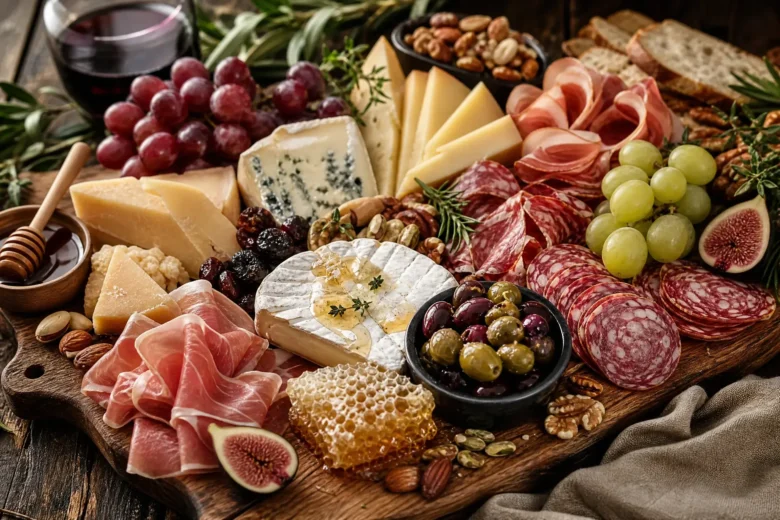
It also gives you an effortless sense of abundance. Even a relatively simple board can look luxurious when it is arranged with care. A few cheeses, one or two cured meats, fresh fruit, crackers, olives, and a small jar of honey can create the impression of a generous spread. That is exactly why charcuterie works so well for entertaining: it looks special without demanding perfection.
Another advantage is flexibility. You can make it more rustic and relaxed with crusty bread, marinated vegetables, and hearty cheeses, or you can push it in a more refined direction with brie, prosciutto, figs, grapes, nuts, and elegant preserves. The structure remains the same, but the mood changes according to your ingredients and presentation.
What Exactly Is a Charcuterie Board?
Traditionally, the word charcuterie refers to prepared meat products such as cured meats, pâtés, terrines, and sausages. In modern entertaining, however, a charcuterie board usually means a composed platter that combines cured meats with cheeses, breads or crackers, fruits, nuts, spreads, and small savory additions.
In practice, it is less about strict culinary definitions and more about balance. A good charcuterie board offers a mix of salty, creamy, crunchy, sweet, tangy, and fresh elements. The goal is to give guests enough variety to build different little bites and flavor combinations as they go.
The Anatomy of a Beautiful Charcuterie Board
A charcuterie board becomes much easier to build when you think of it in categories rather than random ingredients. Instead of asking yourself what to buy, ask what role each ingredient will play on the board. Once you understand the structure, you can adapt it to any occasion.
1. Cheeses: The Foundation of the Board
Cheese is one of the visual and flavor anchors of a charcuterie board. It adds richness, creaminess, saltiness, and variety, and it is often the first thing guests reach for.
How Many Cheeses Should You Include?
For a small to medium board serving around 6 to 8 people, three cheeses are usually ideal. This gives enough variety without making the board feel chaotic.
A balanced trio often looks like this:
- one soft cheese
- one semi-firm cheese
- one stronger or aged cheese
Best Cheeses for an Elegant Charcuterie Board
Soft Cheese
Soft cheeses bring creaminess and a luxurious feel to the board. They also pair beautifully with fruit and honey.
Good options include:
- Brie
- Camembert
- Goat cheese
- Triple cream cheese
Semi-Firm Cheese
These cheeses slice well, hold their shape, and offer a mellow but satisfying flavor.
Great choices include:
- Gruyère
- Gouda
- Havarti
- Edam
- Fontina
Aged or Bold Cheese
A sharper or more assertive cheese creates contrast and depth.
Consider:
- Manchego
- Parmesan shards
- Pecorino
- Aged cheddar
- Gorgonzola or another blue cheese
How to Present Cheese Beautifully
Leave some cheeses whole or partially cut so the board looks generous and organic rather than overly uniform. Brie can be served as a small wheel with one wedge cut out. Parmesan looks beautiful in rustic shards. Goat cheese can be sliced into medallions or shaped into a small log. Variety in shape makes the board feel more styled and less flat.
2. Cured Meats: The Charcuterie Element
Cured meats add savoriness, richness, and that unmistakable charcuterie feel. You do not need a huge selection. Two types are usually enough for a beautiful board.
Best Meats for a Charcuterie Board
- Prosciutto
- Salami
- Soppressata
- Coppa
- Mortadella
- Chorizo, depending on the style of board
How to Arrange Meats for Visual Impact
This is where presentation matters. Instead of laying slices flat, fold or gently gather them to create volume. Salami can be folded in half and layered in little ribbons. Prosciutto looks best loosely draped so it feels soft and abundant. Mortadella can be folded into airy rosettes. Those small details instantly make the board look more generous and elegant.
3. Crackers and Bread: The Essential Crunch
The crunchy element is what gives guests a vehicle for cheese, meat, and spreads. It also prevents the board from feeling too rich or too soft.
What to Include
A good board usually benefits from at least two textures:
- one neutral cracker
- one more rustic or artisanal bread option
Examples:
- water crackers
- seeded crackers
- whole grain crackers
- crostini
- sliced baguette
- toasted sourdough
- breadsticks
Try not to overcrowd the board with too many breads and crackers. They should support the other ingredients, not dominate the space.
4. Fresh Fruit: The Element That Makes Everything Look Expensive
Fresh fruit is one of the easiest ways to make a charcuterie board look vibrant and elegant. It softens the richness of cheese and cured meats while adding color and freshness.
Best Fruits for Charcuterie
- grapes
- figs
- strawberries
- blackberries
- raspberries
- pear slices
- apple slices
- cherries, when in season
Grapes are especially useful because they create instant abundance. Figs add a more luxurious and editorial look. Pears work beautifully with blue cheese, goat cheese, and honey.
How to Keep Fruit Looking Fresh
Slice apples and pears close to serving time, or lightly brush them with lemon juice to prevent browning. Berries should be washed and dried carefully so they do not release excess moisture onto the board.
5. Dried Fruit and Nuts: Small Details That Add Depth
These are the quiet supporting characters that make a charcuterie board feel complete. They fill empty spaces, add texture, and make the board look layered rather than sparse.
Best Dried Fruits
- dried apricots
- dates
- figs
- cranberries
Best Nuts
- walnuts
- pecans
- almonds
- pistachios
- Marcona almonds for a more refined touch
Use them in small clusters rather than scattering them randomly everywhere. That keeps the board visually tidy and easier to navigate.
6. Spreads and Condiments: The Secret to a More Sophisticated Board
A charcuterie board becomes much more interesting when there is something sweet, tangy, or savory to pair with the cheese and meat. This is often the detail that makes the board feel elevated rather than basic.
The Best Condiments for Charcuterie
- fig jam
- honey
- hot honey
- whole grain mustard
- pepper jelly
- balsamic glaze
- olive tapenade
- onion marmalade
How to Use Them
Serve condiments in small bowls or ramekins rather than spooning them directly onto the board. This looks cleaner, keeps ingredients from mixing too soon, and gives the layout more structure.
7. Savory Extras That Add Personality
These are not essential, but they add interest and make the board feel more custom and abundant.
Some excellent options include:
- marinated olives
- cornichons
- roasted peppers
- artichoke hearts
- pickled onions
- sun-dried tomatoes
If your cheeses and meats are already quite rich, choose lighter savory extras such as olives or cornichons to bring acidity and contrast.
How to Build a Charcuterie Board Step by Step
Now that the ingredients are clear, the real question is how to put them together so the board looks full, balanced, and intentional rather than messy.
Step 1: Choose the Right Board or Platter
You do not need a special charcuterie board to make this work. A large wooden cutting board, a marble slab, a ceramic platter, or even a baking tray lined with parchment can work beautifully. What matters most is having enough surface area to arrange everything without cramming it too tightly.
If you are serving 6 to 8 people, choose a board large enough to hold three cheeses, two meats, crackers, fruit, and a few extras comfortably.
Step 2: Place the Bowls First
If you are using honey, olives, jam, mustard, or tapenade, start by placing the small bowls on the board. These act as anchors and help you shape the rest of the arrangement.
Try spacing them apart so the board feels balanced rather than crowded on one side.
Step 3: Add the Cheeses
Place the cheeses next. Spread them around the board rather than clustering them together. This makes it easier for guests to access different areas and naturally creates a more abundant look.
Remember to vary shapes:
- one wedge
- one wheel or round
- one block, sliced cheese, or rustic shards
Step 4: Arrange the Meats
Tuck the cured meats around the cheeses. Fold or gather them for volume. The goal is to create little pockets of texture rather than flat stacks.
Step 5: Add Fruit in Clusters
Place grapes, berries, or fig wedges in little clusters around the board. Fruit should soften the spaces between cheeses and meats and bring visual freshness.
Step 6: Fill the Gaps with Nuts, Dried Fruit, and Savory Extras
This is where the board starts to feel full. Fill smaller spaces with walnuts, dried apricots, olives, or cornichons. Think of them as the finishing details that make the board feel abundant and polished.
Step 7: Add Crackers and Bread Last
Crackers and bread should go on the board near cheeses and spreads, but not in a way that covers everything else. You can also serve extra crackers or sliced baguette in a separate basket if you want to keep the board visually cleaner.
Step 8: Finish with Garnishes
Fresh rosemary, thyme sprigs, or a few edible flowers can add a subtle decorative touch. The goal is not to turn the board into a floral arrangement, but to give it a little lift and color.
Easy Charcuterie Board Formula for Beginners
If you want a simple formula you can use every time, this one works beautifully for a medium board:
For 6 to 8 Guests
Cheese
- 3 cheeses
Meat
- 2 cured meats
Crunch
- 2 crackers or 1 cracker plus sliced baguette
Fresh Fruit
- 2 types
Dried Fruit
- 1 type
Nuts
- 1 or 2 types
Condiments
- 2 small bowls, such as honey and fig jam
Savory Extras
- 1 or 2 items, such as olives or cornichons
This formula keeps the board varied and elegant without becoming overwhelming to shop for or assemble.
Elegant Charcuterie Board Ideas for Different Occasions
One of the best things about charcuterie is how easily it can adapt to the mood of the gathering.
Wine Night Charcuterie Board
Focus on cheeses that pair well with wine, such as brie, manchego, and blue cheese. Add grapes, figs, walnuts, honey, and prosciutto. This is the most classic and elegant version.
Holiday Charcuterie Board
Use seasonal touches such as cranberries, pomegranate seeds, rosemary sprigs, candied nuts, and baked brie. A holiday board can feel festive without becoming gimmicky.
Summer Entertaining Board
Lean into fresh fruit, burrata or goat cheese, marinated vegetables, olives, and lighter cured meats. A rosé-friendly board feels especially fresh and inviting.
Italian-Inspired Charcuterie Board
Use prosciutto, mortadella, salami, parmesan, pecorino, olives, artichokes, roasted peppers, focaccia, and fig jam. This version feels especially generous and warm.
Charcuterie Pairing Tips That Make the Board More Memorable
A great charcuterie board is not just about ingredients; it is about how those ingredients work together.
Classic Pairings to Try
- brie + fig jam
- blue cheese + honey + pear
- manchego + quince paste
- goat cheese + berries
- prosciutto + fig + balsamic glaze
- salami + mustard + aged cheddar
- parmesan + honey + walnuts
These combinations help guests create bites that feel intentional rather than random.
How Much Charcuterie Should You Serve Per Person?
If the board is being served as an appetizer before dinner, you can be more restrained. If it is the main focus of a wine night or cocktail gathering, you will need more.
As an Appetizer Before Dinner
Plan for approximately:
- 2 to 3 oz of cheese per person
- 1 to 2 oz of meat per person
- a modest amount of crackers, fruit, and extras
As the Main Entertaining Food
Increase to:
- 3 to 4 oz of cheese per person
- 2 to 3 oz of meat per person
- more bread, crackers, fruit, and condiments
It is always better to have a little extra than to build a board that looks skimpy. Charcuterie should feel generous.
Common Charcuterie Mistakes to Avoid
Using Too Many Ingredients
A board with too many items can look cluttered and confusing. Variety is lovely, but cohesion matters more.
Forgetting Texture
If everything is soft and creamy, the board becomes heavy. Crunchy crackers, nuts, and fresh fruit are essential for balance.
Serving Cheese Too Cold
Cold cheese tastes muted and firm. Remove cheese from the refrigerator about 30 minutes before serving so it reaches a better texture and fuller flavor.
Ignoring Color
A board made entirely of beige ingredients can look flat. Fresh fruit, herbs, olives, and preserves help bring life to the presentation.
Leaving No Space for Guests to Grab Things
The board should look abundant, but it should still be practical. Guests need room to pick up slices of cheese, crackers, and fruit without everything collapsing.
Make-Ahead Tips for Stress-Free Entertaining
One of the biggest advantages of a charcuterie board is that much of it can be prepared ahead.
The Day Before
You can:
- buy and portion cheeses
- wash and dry fruit
- prepare bowls of olives or nuts
- slice baguette for crostini
- gather serving pieces and utensils
A Few Hours Before Guests Arrive
You can:
- arrange most of the board
- wrap it lightly and refrigerate
- keep crackers separate if you want them crisp
Just Before Serving
Add:
- crackers and bread
- cut apples or pears
- final drizzles of honey
- fresh herb garnishes
That is enough to keep the board looking fresh while still making entertaining feel easy.
An elegant charcuterie board is one of the smartest appetizers you can serve when you want maximum impact with minimal stress. It looks beautiful, invites guests to gather naturally, and gives you endless flexibility in terms of ingredients, budget, and style. More importantly, it allows you to host in a way that feels warm, relaxed, and polished all at once.
Conclusion
The real secret is not buying the most expensive ingredients or creating an oversized board for social media. It is understanding balance. A good charcuterie board combines creamy cheeses, savory meats, fresh fruit, crunch, sweetness, and a few thoughtful details that make every bite feel special. Once you know that formula, you can adapt it for anything from a casual wine night to a more elegant dinner party.
If you want an appetizer that is easy to assemble, beautiful to serve, and almost guaranteed to impress your guests, charcuterie deserves a permanent place in your entertaining repertoire.
Frequently Asked Questions About Charcuterie Boards
What is the best cheese for a charcuterie board?
There is no single best cheese, but a combination works best. For a balanced board, choose one soft cheese such as brie, one semi-firm cheese such as gouda or gruyère, and one aged or bold cheese such as manchego, parmesan, or blue cheese.
How far in advance can I make a charcuterie board?
You can prepare most of the ingredients a few hours in advance and keep the board lightly covered in the refrigerator. Add crackers, bread, and delicate garnishes just before serving so everything stays crisp and fresh.
How do I keep a charcuterie board from looking messy?
Use small clusters rather than scattering everything. Place bowls first, then cheeses, meats, fruit, and finally the smaller fillers. Repeating ingredients in a few strategic areas makes the board look full without feeling chaotic.
What should not go on a charcuterie board?
Anything overly wet or difficult to serve can create a messy board. Try to avoid ingredients that leak too much liquid, become soggy quickly, or require cutting at the table unless you are prepared with the right utensils.
Can I make a charcuterie board on a budget?
Absolutely. You do not need a dozen cheeses or imported ingredients. A beautiful board can be made with two or three accessible cheeses, one cured meat, seasonal fruit, crackers, nuts, and a simple jar of honey or jam. Presentation matters more than quantity.