5 Italian Appetizers That Transport Your Guests Straight to the Italian Table
| Recipe | Description |
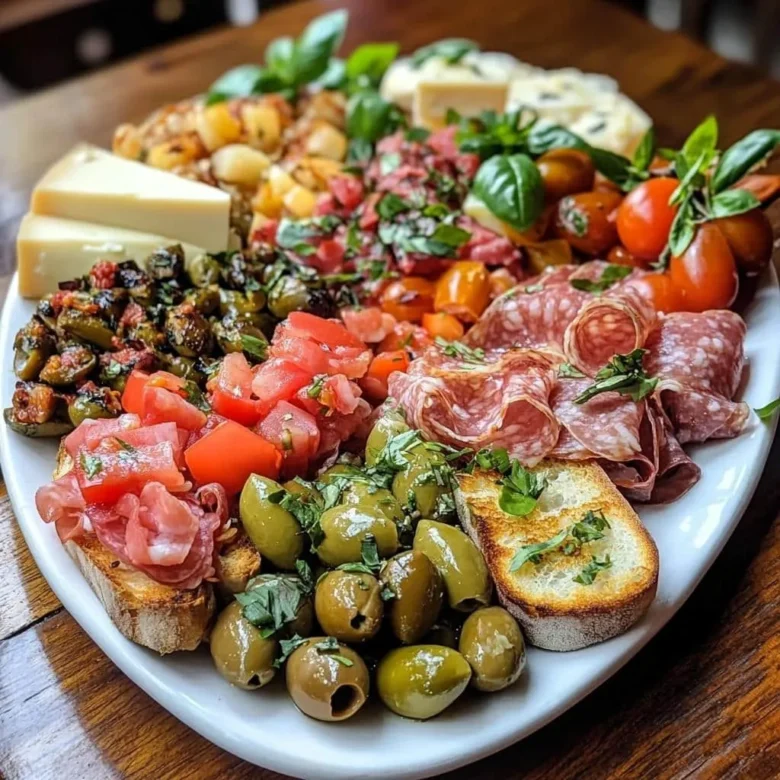
| 1. Bruschetta al Pomodoro | The definitive tomato bruschetta with hand-crushed San Marzano tomatoes and basil |
| 2. Prosciutto e Melone | The classic Italian summer pairing of silky cured ham and sweet cantaloupe |
| 3. Peperoni Arrostiti con Acciughe | Roasted sweet peppers with anchovy, capers and olive oil — served at room temperature |
| 4. Olive Marinate alle Erbe | Slow-marinated olives with citrus, herbs, garlic and chilli — a two-day flavor transformation |
| 5. Crostini Toscani con Fegatini | Tuscan-style chicken liver crostini with capers, anchovy and vin santo — the true Tuscan antipasto |
Recipe 1: Bruschetta al Pomodoro
In Rome, bruschetta is served with nothing but olive oil and garlic. In Naples, the tomato is everything. This version honors both traditions by letting excellent tomatoes and excellent oil share the stage equally.
Ingredients (makes 16 bruschette, serves 6 to 8):
For the tomato topping:
- 600g very ripe tomatoes — a mix of San Marzano and cherry tomatoes if possible
- 2 tbsp excellent extra virgin olive oil — plus more for drizzling at the end
- 1 garlic clove, very finely grated
- 12 large fresh basil leaves, torn roughly by hand — never cut with a knife
- 1 tsp flaky sea salt — Maldon or similar
- 1/2 tsp freshly cracked black pepper
- 1 tsp aged balsamic vinegar — the thick, syrupy kind, not thin balsamic
For the bread base:
- 1 large ciabatta or pane di casa, cut into 16 thick diagonal slices
- 2 garlic cloves, halved — for rubbing on the grilled bread
- Extra virgin olive oil for brushing the bread before grilling
- Flaky sea salt to finish
Preparation Method
- Marinate Time: 15 mins | Cook Time: 5 mins | Yield: Best served immediately
1. Marinate the Tomatoes
- Prep: Core and roughly dice the San Marzano tomatoes; halve or quarter the cherry tomatoes.
- Marinate: In a bowl, toss the tomatoes with grated garlic, olive oil, flaky salt, and black pepper. Leave at room temperature for exactly 15 minutes (any longer and they release too much liquid).
- Finish: Just before serving, fold in the torn basil and balsamic vinegar.
2. Grill and Season the Bread
- Grill: Brush both sides of the bread slices with olive oil. Grill on a hot cast-iron pan (or under a broiler) for 2–3 minutes per side until deeply charred at the edges and completely crisp.
- Perfume: While the bread is piping hot, firmly rub one side of each slice with the cut surface of a halved garlic clove. The hot, rough bread will naturally grate and absorb the garlic without leaving harsh chunks.
3. Assemble and Serve
- Top: Arrange the toasts on a board. Use a slotted spoon to scoop the tomato mixture onto each slice, leaving excess juices behind in the bowl to prevent sogginess.
- Garnish: Finish with a final drizzle of premium extra virgin olive oil and a pinch of flaky salt. Serve within 10 minutes.
Hosting Pro-Tip: For large groups, grill the bread in advance and keep it wrapped in a clean kitchen towel. The tomato base can sit for up to an hour, but remember to add the fresh basil and balsamic vinegar at the absolute last second to preserve their brightness.
Perfect Wine Pairings
- White: A cold, crisp Pinot Grigio delle Venezie or a bright Verdicchio. Their natural acidity mirrors the fresh tomatoes perfectly.
- Red: A light, young Chianti works beautifully if your guests prefer red wine.
Recipe 2: Prosciutto e Melone
This combination has been eaten in Italy since at least the Renaissance. Bartolomeo Scappi, personal cook to Pope Pius V, included prosciutto with melon in his extraordinary 1570 cookbook. Few things in the culinary world have earned their place at the table as consistently or as deservedly.
Ingredients (serves 6 to 8):
- 200g prosciutto di Parma, sliced paper-thin — ask the deli to slice it fresh if possible
- 1 large ripe cantaloupe melon (or 2 small ones) — the orange-fleshed variety
- Extra virgin olive oil — a fruity, delicate variety works best here
- Freshly cracked black pepper
- Optional: a small handful of fresh mint leaves for a contemporary touch
- Optional: a drizzle of aged balsamic glaze to finish
- Optional: fresh arugula leaves as a peppery bed for the melon
Method:
Halve the melon and scoop out the seeds with a spoon. Cut each half into wedges of approximately 3 to 4 cm thickness. Remove the rind from each wedge with a sharp knife. For a more elegant, modern presentation, use a melon baller to scoop the flesh into perfect spheres and arrange them in clusters on the serving plate. For the traditional approach, the wedges presented with the rind still on (removed only at the table by the guest) is equally beautiful and more rustic.
Remove the prosciutto from the refrigerator at least 30 minutes before serving. This is not optional — cold prosciutto is stiff, pale and muted in flavor. At room temperature, it becomes silky, translucent, and releases the full complexity of its curing and aging.
To assemble: drape the prosciutto slices over the melon in loose, generous folds. Do not lay it flat and smooth — draped and slightly crumpled prosciutto looks far more abundant and appealing. The folds also create beautiful shadow and depth on the plate. Finish with a few grinds of black pepper, the lightest drizzle of olive oil, and fresh mint if using. If using arugula, scatter it beneath the melon before placing the prosciutto.
Pro tip:
If you cannot find prosciutto di Parma, prosciutto di San Daniele from Friuli is equally excellent and has a slightly sweeter, more delicate flavor. Both are incomparably superior to generic prosciutto. For a spectacular presentation variation, wrap each melon ball individually in a half-slice of prosciutto and secure with a cocktail pick — this transforms the dish into a finger food that circulates beautifully at a standing reception.
Perfect pairing:
This pairing is one of the very few food combinations that works perfectly with a cold glass of Prosecco — the bubbles and the slight sweetness of the wine mirror the melon while the acidity cuts through the fat of the prosciutto. For a still wine, a delicate, slightly floral Pinot Grigio from Trentino-Alto Adige is the classic regional companion. The combination of the wine and the food together is more than the sum of its parts.
Recipe 3: Peperoni Arrostiti con Acciughe e Capperi
In Piedmont, this dish is known as peperoni in bagna cauda and the anchovy element is even more prominent. In Sicily, it appears with golden raisins and pine nuts alongside the capers. This version sits between those regional traditions, honoring the anchovy while letting the pepper remain the star.
Ingredients (serves 6 to 8):
For the roasted peppers:
- 4 large sweet peppers — a mix of red, yellow and orange for visual impact
- 4 tbsp extra virgin olive oil
- 2 garlic cloves, very thinly sliced
- 6 anchovy fillets in olive oil, drained and roughly chopped
- 2 tbsp capers, drained and rinsed
- 1 tbsp red wine vinegar
- Fresh flat-leaf parsley, coarsely chopped — a generous handful
- Freshly cracked black pepper
- Flaky sea salt to taste — be cautious as anchovies and capers are both salty
To serve:
- Good quality ciabatta or focaccia alongside
- Additional olive oil to drizzle at the table
Method:
To roast the peppers: place them directly on the burner grate of a gas hob over a high flame, turning with tongs every 2 to 3 minutes until the skin is completely charred and blistered on all sides. This takes 10 to 12 minutes in total. Alternatively, place them on a baking sheet under a broiler at the highest setting, turning every few minutes, until equally charred. The charring must be complete and even — partially charred peppers do not peel cleanly.
Place the charred peppers immediately into a bowl and cover tightly with plastic wrap or a plate. Leave to steam for 15 to 20 minutes. The steam trapped inside the bowl loosens the charred skin from the flesh, making it easy to peel. After steaming, peel the skin away with your fingers — it should come off in sheets. Do not rinse the peppers under water, as this washes away the smoky oils that carry so much of the flavor. Remove the seeds and membranes, then tear the flesh into wide, irregular strips rather than cutting it — torn edges look more beautiful and hold the marinade better.
For the dressing: in a small pan over very low heat, warm the olive oil with the sliced garlic and anchovy fillets. Stir gently until the anchovies dissolve completely into the oil — about 3 to 4 minutes. They should melt without any hint of sizzling or frying, leaving behind a deeply savory, golden oil. Remove from heat and add the red wine vinegar and capers. Stir and leave to cool slightly.
Arrange the pepper strips on a serving platter. Pour the anchovy and caper dressing over the top while still warm. Scatter the fresh parsley generously. Leave to cool to room temperature, then cover and refrigerate for at least one hour, or ideally overnight. The flavors meld and deepen dramatically during this rest. Return to room temperature before serving — at least 30 minutes out of the refrigerator.
Pro tip:
This dish is at its absolute best the day after it is made. The pepper flesh continues to absorb the anchovy-caper marinade overnight, and the flavors integrate into something significantly more complex than the freshly dressed version. Make it up to 3 days in advance — it keeps beautifully in the refrigerator in a covered container. Bring fully to room temperature and taste for seasoning before serving, as cold suppresses salt perception.
Perfect pairing:
The smoky-sweet peppers and the intense anchovy dressing call for a wine with enough structure to hold its own. A glass of Greco di Tufo from Campania, with its mineral, slightly smoky character, is a regional pairing of genuine elegance. A Vermentino from Sardinia also works beautifully. For a red, a young, fruity Nero d’Avola from Sicily echoes the Sicilian tradition of this dish.
Recipe 4: Olive Marinate alle Erbe e Agrumi
The tradition of marinating olives before serving them is ancient and universal in Italian food culture. Every region has its variation. In Liguria, they use Taggiasca olives and herbes de Provence. In Calabria, the chilli is prominent. In Sicily, fennel and orange peel dominate. This recipe draws from all three.
Ingredients:
For the marinated olives:
- 500g mixed Italian olives — a combination of Castelvetrano (bright green, buttery), Cerignola (large, meaty) and Gaeta (small, dark, brine-cured) is ideal
- 150ml extra virgin olive oil — use a good one, as this becomes the marinade
- 4 garlic cloves, lightly crushed with the flat side of a knife but left whole
- Zest of 1 large lemon, removed in strips with a vegetable peeler
- Zest of 1 orange, removed in strips with a vegetable peeler
- 4 sprigs of fresh rosemary
- 6 sprigs of fresh thyme
- 2 fresh bay leaves
- 1 tsp fennel seeds, lightly toasted in a dry pan
- 1 to 2 dried red chillies, cracked open
- 1 tsp black peppercorns, lightly crushed
- A small pinch of dried oregano
Method:
Begin by draining and rinsing the olives if they come from a brine. Pat them dry with paper towels — excess moisture will dilute and cloud the marinade oil. If using olives with pits, leave them whole. The pit inside an olive contributes to flavor during marinating and also signals to guests that they are eating something properly made.
In a small saucepan over the lowest possible heat, combine the olive oil with the garlic, citrus zest strips, rosemary, thyme, bay leaves, fennel seeds, cracked chillies and black peppercorns. Heat very gently for 8 to 10 minutes. The oil should barely tremble at the surface — you are infusing, not frying. The garlic should not color at all. After 10 minutes, the oil will be beautifully fragrant with all the aromatics.
Remove from heat and add the dried oregano. Allow the oil and aromatics to cool for 5 minutes, then pour everything — oil, garlic, herbs, citrus, spices and all — over the drained olives in a bowl or jar. Stir to combine. Leave to cool completely at room temperature, then cover and refrigerate.
After 24 hours, taste one olive. It should already be noticeably more complex and fragrant than when you started. After 48 hours, the transformation is complete. The olives should taste richly of all their aromatics simultaneously, and the oil should be extraordinary.
To serve: bring the olives to room temperature at least 1 hour before serving — the oil will have solidified slightly in the refrigerator and will return to its liquid state at room temperature. Transfer to a shallow bowl and arrange the visible herbs and citrus strips attractively. Provide a small dish alongside for olive pits and small cocktail spoons or toothpicks for serving.
Pro tip:
These marinated olives keep in the refrigerator for up to 3 weeks in a covered jar, improving with every passing day up to about day 5, then holding beautifully. The leftover marinade oil after the olives are eaten is extraordinary — use it to dress salads, dip bread, finish pasta, or drizzle over grilled fish. It should be treated as a precious condiment in its own right.
Perfect pairing:
Marinated olives are one of the most wine-versatile antipasti that exists. They work with almost everything, but shine most brightly alongside a cold glass of dry Italian aperitivo: a Negroni, a Campari soda, or a glass of well-chilled Aperol spritz. For wine, a dry, slightly bitter Vermentino from Sardinia is a natural companion to the fennel, chilli and citrus in the marinade.
Recipe 5: Crostini Toscani con Fegatini
In Florence, crostini toscani are served as a matter of course at the beginning of every Florentine meal. The version with vin santo — the famous Tuscan dessert wine — is considered the most refined, as the wine adds a subtle sweetness and complexity that brings the livers into focus rather than masking them. If vin santo is unavailable, a dry Marsala or a tablespoon of good cognac substitutes creditably.
Ingredients (makes approximately 24 crostini, serves 6 to 8):
For the chicken liver pate:
- 400g fresh chicken livers, trimmed of all sinew and membrane
- 1 medium white onion, very finely diced
- 3 tbsp extra virgin olive oil
- 2 tbsp unsalted butter — divided
- 2 anchovy fillets in olive oil, drained
- 2 tbsp small capers, drained and rinsed — plus extra whole capers for garnish
- 80ml vin santo or dry Marsala
- 1 tsp fresh thyme leaves
- 1 bay leaf
- Salt and freshly cracked black pepper
- Optional: a small grating of nutmeg — traditional in Florence
For the crostini base:
- 1 baguette or Tuscan pane di casa, sliced into rounds about 1cm thick
- Extra virgin olive oil for brushing
- 1 garlic clove, halved — for rubbing
To garnish:
- Whole capers
- Fresh flat-leaf parsley leaves
- A very light drizzle of extra virgin olive oil
Method:
Begin with the chicken livers. Examine each liver carefully and remove all green-tinged parts — these come from bile and will make the pate bitter. Remove any visible sinew or white connective tissue. Cut the livers into rough pieces of similar size to ensure even cooking.
In a medium skillet over medium heat, warm the olive oil with 1 tablespoon of the butter. Add the finely diced onion and cook slowly for 12 to 15 minutes until completely soft, translucent and very lightly golden at the edges. Do not rush this step — a well-cooked onion is the sweet, savory base on which everything else is built. Add the bay leaf and thyme and cook for 1 more minute.
Increase the heat to medium-high. Add the chicken livers in a single layer and season generously with salt and pepper. Cook for 2 minutes without moving them, then turn. The livers should be golden-brown on the outside and still very faintly pink at the center — this is crucial. Overcooked chicken livers turn grainy and bitter; barely cooked livers have a silky, creamy texture and a clean, almost sweet flavor. Add the anchovy fillets and the capers and stir for 30 seconds until the anchovies begin to melt.
Pour in the vin santo and let it bubble vigorously for 1 to 2 minutes, scraping any caramelized bits from the bottom of the pan. Remove from heat and discard the bay leaf. Transfer everything to a food processor and add the remaining tablespoon of cold butter. Process to your preferred texture: a few pulses gives a coarse, rustic result that the Tuscans prefer; longer processing gives a smooth, refined pate. Taste and adjust seasoning — it should be rich, savory, slightly sweet from the vin santo, and deeply complex.
For the crostini: brush each bread slice lightly with olive oil and arrange on a baking sheet. Toast under the broiler or in a 200 degree C oven for 4 to 5 minutes until golden and crisp. While still warm, rub lightly with the cut garlic clove.
To serve: spread the chicken liver pate generously onto each crostino — be generous, as a thin scraping is always a disappointment. Top with a single whole caper and a small flat-leaf parsley leaf for each piece. Arrange on a platter and add a final whisper of olive oil. Serve at room temperature.
Pro tip:
The chicken liver pate can be made up to 3 days in advance and kept in the refrigerator in a covered container. To prevent the surface from oxidizing and browning, press a layer of plastic wrap directly onto the surface of the pate before covering. Remove from the refrigerator 30 minutes before spreading. The crostini base can be toasted the morning of the event and kept in an airtight container at room temperature — they reheat beautifully for 5 minutes in a low oven if needed. Spread only at the moment of serving.
Perfect pairing:
Crostini toscani are traditionally served with a glass of Chianti Classico, the great wine of the Tuscan hills. The earthy, cherry-dark fruit of a good Chianti and the savory richness of the chicken liver pate is one of those pairings that has been refined over generations to a point of near-perfection. For a white wine option, a mineral, textured Vernaccia di San Gimignano from just outside Florence creates a surprising and completely successful counterpoint to the richness of the pate.
Complete Pairing and Presentation Guide
| Antipasto | Best Wine Pairing | Presentation Suggestion |
| Bruschetta al Pomodoro | Pinot Grigio, Verdicchio, young Chianti | Long wooden board with fresh basil leaves |
| Prosciutto e Melone | Prosecco, Pinot Grigio Trentino | White oval platter with arugula and mint |
| Peperoni Arrostiti | Greco di Tufo, Vermentino, Nero d’Avola | Wide ceramic dish at room temperature |
| Olive Marinate | Vermentino, Campari soda, Aperol Spritz | Small earthenware bowl with visible herbs |
| Crostini Toscani | Chianti Classico, Vernaccia di San Gimignano | Rustic wooden board in overlapping rows |
Conclusion
The five antipasti in this collection are not simply appetizers. They are a philosophy of hospitality expressed through food — the Italian belief, held for centuries and proved right by every gathering that honors it, that the way you welcome people to your table determines everything that follows. When guests arrive to find a table already set with beautiful, fragrant, generous food, something shifts in the room. The formality drops. The conversation starts more easily. The evening begins in earnest rather than waiting for permission to.
None of these recipes require professional training. Several require almost no cooking at all. What they all require is attention to ingredients, patience with timing, and the willingness to treat a bowl of olives or a plate of prosciutto with the same seriousness and care that you would bring to the main course. Because in the Italian tradition, that is exactly what they are — not a prelude to the meal, but the beginning of it.
Choose one recipe for a simple weeknight aperitivo. Build all five into a spread for a celebration. Or start with the bruschetta — because there is no better place to begin understanding Italian food than with bread, oil, garlic, and the ripest tomato you can find. The rest follows naturally from there.
Frequently Asked Questions
1. Can I substitute prosciutto di Parma with other cured meats in Recipe 2?
Yes, several Italian cured meats work beautifully in place of prosciutto di Parma. Prosciutto di San Daniele from Friuli is equally excellent and arguably slightly sweeter and more delicate. Bresaola, the air-dried beef from Lombardy, is a leaner and more intensely flavored option that pairs particularly well with arugula, shaved Parmesan and a squeeze of lemon — a different combination but equally authentic. Speck from Alto Adige, which is cold-smoked and spiced, adds a more complex, slightly herbal character that some guests prefer. All of these are genuinely Italian alternatives that honor the spirit of the recipe.
2. What if I cannot find vin santo for the crostini toscani?
Vin santo can be difficult to source outside of Italy and specialist wine shops. The best substitute is a dry Marsala from Sicily, which is similarly a fortified wine with some nutty, oxidative character, though slightly less sweet. A tablespoon of good cognac or brandy with a small additional pinch of sugar will also work creditably. In a genuine emergency, a dry sherry such as an Oloroso or an Amontillado produces a similar flavor profile. What you want to avoid is substituting with a regular dry white wine — the dish needs the fortification and slight sweetness that a passito-style wine provides.
3. How far in advance can I marinate the olives and how should I store them?
The marinated olives can be prepared up to three weeks in advance, and the flavor improves significantly over the first four to five days of marinating. After that, the flavor holds beautifully without further development. Store them in a clean glass jar with a tight-fitting lid in the refrigerator. The olive oil will solidify when cold — this is completely normal. Remove from the refrigerator one hour before serving and the oil will liquefy and return to its original state. Never store marinated olives in a non-airtight container, as they will absorb refrigerator odors.
4. Are there vegetarian alternatives for the anchovy-based recipes?
Both the peperoni arrostiti and the crostini toscani contain anchovy as a foundational flavor element. For vegetarian guests, the roasted peppers can be dressed with a simple combination of extra virgin olive oil, red wine vinegar, capers, garlic and fresh herbs, which delivers acid and brine without the anchovy. The result is lighter but genuinely delicious. The crostini toscani is more challenging to adapt, as the chicken liver is the dish itself. A creditable vegetarian alternative is a crostino with white bean puree, roasted garlic, sage and a drizzle of truffle oil, which delivers a similar richness and depth while remaining completely animal-product-free.
5. Can these antipasti be served as a full meal rather than just a first course?
Absolutely, and this is in fact one of the most elegant and convivial ways to entertain for a casual lunch or light dinner. In Italy, a spread of antipasti supplemented with good bread, a bowl of pasta e fagioli or a simple green salad, and a platter of seasonal fruit and cheese to finish constitutes a complete and deeply satisfying meal. The antipasto as a full meal is also the most practical entertaining format for hosts who want to spend time with their guests rather than in the kitchen — all five recipes can be prepared in advance, brought to room temperature, arranged beautifully, and then require no further attention from the cook for the rest of the meal.