Introduction
If there is one ingredient that has the power to transform any ordinary dinner into a truly special evening without requiring enormous effort, that ingredient is shrimp. It arrives at the table with that vibrant pink color that already brings smiles before the first forkful. It fills the kitchen with an irresistible aroma the moment it hits a hot pan with garlic and butter. And it carries a natural sophistication that few ingredients can offer so effortlessly, regardless of how it is prepared.
The great news for anyone who is just beginning to cook with more elegance is that shrimp is one of the most generous ingredients in the kitchen. It cooks in minutes, accepts an incredible variety of seasonings and sauces, pairs beautifully with both simple and sophisticated sides, and has that visual appeal that makes it seem like it required far more time and technique than it actually did. It is the ingredient that works for you.
In this article, you will find a complete, carefully considered menu built around shrimp as its central thread, from the crispy starter that opens the appetite in style, through the main course that will make everyone stop and stare when it arrives at the table, all the way to the light and sophisticated dessert that closes the evening perfectly. Every recipe was developed for beginners who want elegant results, with practical tips, a preparation timeline, and everything you need to execute this dinner without stress. Tie on your apron and let us get started.
Why Shrimp is the Perfect Ingredient for Elegant Dinners
Before getting into the recipes, it is worth understanding what makes shrimp so special as the star of a sophisticated dinner, especially for those still developing their skills in the kitchen.
- Ultra-fast preparation: Shrimp is one of the fastest protein ingredients to cook. A medium shrimp is perfectly done in 2 to 3 minutes per side, which means you have more time to focus on presentation, the side dishes, and enjoying the company of your guests.
- Naturally impressive visual appeal: That intense pink color shrimp takes on during cooking is naturally attractive and photogenic. On a platter or individual plate, it always steals the show without needing elaborate presentation tricks.
- Flavor versatility: Shrimp has a naturally mild and slightly sweet flavor that works like a blank canvas for seasonings. Garlic, lemon, butter, white wine, fresh herbs, saffron, mild curry — it accepts everything with grace.
- Growing accessibility: Although shrimp is considered a premium ingredient, it is increasingly available in supermarkets, especially in frozen peeled form, which is both convenient and maintains excellent quality when thawed correctly.
Complete Menu Overview
Here is the full picture of the dinner we are going to build together:
| Course | Dish |
| Starter | Crispy Panko Shrimp with Sriracha Mayonnaise Dipping Sauce |
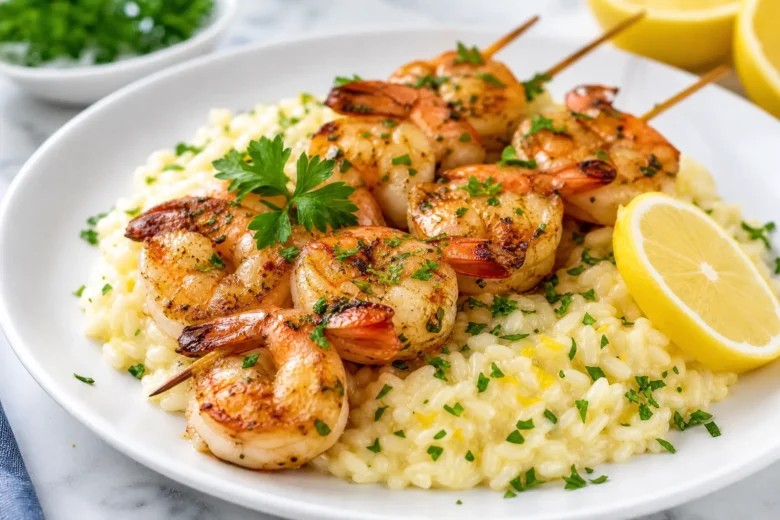
| Main Course | Shrimp in Garlic Butter and White Wine Sauce |
| Side Dish 1 | Saffron Rice with Toasted Almonds |
| Side Dish 2 | Herb Butter Sauteed Vegetables |
| Side Dish 3 | Artisan Garlic Bread with Fine Herbs |
| Dessert | Passion Fruit Mousse Tart with Biscuit Base |
This menu was designed to create an intelligent flavor progression, from the lively crunch of the starter all the way to the tropical lightness of the dessert, with shrimp shining in two distinct appearances that showcase its versatility without overwhelming the palate.
Starter: Crispy Panko Shrimp with Sriracha Mayonnaise
The starter that puts everyone in party mode immediately
There is no starter more lively and simultaneously sophisticated than panko-breaded shrimp with that golden crispy coating, served alongside a sriracha mayonnaise dipping sauce that balances creaminess and heat in an absolutely addictive way. This is the starter that makes people look at each other and already know the dinner is going to be incredible.
Ingredients (serves 4)
For the crispy shrimp:
- 500g large shrimp, peeled and deveined
- 100g panko breadcrumbs
- 2 eggs, beaten
- 80g all-purpose flour
- 1 tsp smoked paprika
- 1 tsp garlic powder
- Salt, pepper and lemon juice to taste
- Oil for frying
For the sriracha mayo dipping sauce:
- 4 tbsp good-quality mayonnaise
- 1 tbsp sriracha sauce (adjust to your heat preference)
- 1 tsp fresh lemon juice
- 1 tsp honey
- 1 small garlic clove, finely grated
Method
Pat the shrimp completely dry with paper towels — this step is essential for the coating to adhere properly. Season with salt, pepper, smoked paprika and garlic powder. Let them rest for 10 minutes.
Set up your breading station in three separate bowls: all-purpose flour, beaten eggs, and panko breadcrumbs. Pass each shrimp through the flour first (shake off the excess), then the egg, and finally the panko, pressing gently so it adheres well all around.
Fry in hot oil at 180 degrees C for about 2 minutes per side until deeply golden and crisp. Drain on paper towels.
For the dipping sauce: whisk all ingredients together in a small bowl until smooth and homogeneous. Taste and adjust the heat level.
Serve the shrimp on a wooden board or slate, with the sauce in a small ramekin alongside. Add lemon wedges and a handful of fresh arugula for decoration — the green contrasts beautifully with the golden shrimp.
Pro tip: The shrimp can be breaded up to 2 hours in advance and kept on a lined tray in the refrigerator. Fry only at the moment of serving to guarantee maximum crunch. The sriracha mayo is actually better made the day before — the flavors meld and become noticeably rounder and more complex.
Main Course: Shrimp in Garlic Butter and White Wine Sauce
The absolute center of attention — and everyone will ask for the recipe
If there is one sauce that was created specifically to celebrate shrimp, it is the combination of butter, garlic and white wine. It is classic, it is elegant, it is perfumed in a way that makes guests lean forward involuntarily when the dish arrives at the table. And the best part: it takes fewer than 15 minutes from start to finish.
Ingredients (serves 4)
- 800g large shrimp, peeled and deveined (tails on for elegance)
- 6 garlic cloves, very finely chopped
- 150ml dry white wine of good quality
- 100g unsalted butter, cold and cut into small cubes
- 2 tbsp extra virgin olive oil
- Juice and zest of 1 lemon
- 1 tbsp capers (optional — adds elegant acidity)
- Generous handful of fresh flat-leaf parsley, finely chopped
- Sliced spring onion to finish
- Salt, black pepper and red pepper flakes to taste
- Smoked paprika for color
Method
Preparing the shrimp:
Pat the shrimp very dry with paper towels. Season with salt, pepper, smoked paprika and a drizzle of olive oil. Set aside.
Building the sauce:
In a large skillet, preferably cast iron or stainless steel, heat the olive oil over high heat until very hot. Add the shrimp in a single layer without crowding. Sear for exactly 90 seconds without moving them, flip, and sear for another 90 seconds. They should be pink with a light golden edge. Remove and set aside.
In the same skillet, reduce heat to medium. Add half the butter and the minced garlic. Cook for 1 minute until the garlic begins to turn lightly golden and fragrant. Pour in the white wine and scrape the bottom of the pan to incorporate all the caramelized juices. Let it reduce for 3 minutes until the alcohol cooks off and the sauce thickens slightly.
Add the capers, lemon juice and zest. Incorporate the remaining cold butter in small cubes, stirring constantly over low heat. This process creates a silky, glossy sauce. Adjust the salt and add the red pepper flakes.
Return the shrimp to the pan for just 30 seconds to warm through in the sauce. Do not cook further. Finish with parsley and spring onion.
Serve immediately in warmed wide bowls, with the sauce drizzled generously over the top.
Pro tip: The secret to a silky sauce is adding the cold butter gradually in small cubes, always over low heat and always stirring. Room-temperature butter or high heat will break the sauce into separated fat and liquid. Patience here is worth everything.
Side Dish 1: Saffron Rice with Toasted Almonds
The golden side dish that elevates the main course to another level
Saffron has that intense golden color and unique floral aroma that transform a simple rice into something that looks like it came straight from a high-end Mediterranean restaurant. And you only need a pinch to color and perfume an entire pot. Unbeatable value for the sophistication it delivers.
Ingredients (serves 4)
- 300g basmati rice
- A generous pinch of saffron threads (about 0.2g) dissolved in 2 tbsp hot water for 10 minutes
- 60g flaked almonds
- 1 small onion, finely diced
- 2 garlic cloves, minced
- 2 tbsp unsalted butter
- 1 tbsp extra virgin olive oil
- 1 litre hot vegetable stock
- Salt and black pepper to taste
- Fresh flat-leaf parsley or cilantro to finish
- Lemon zest to finish (optional)
Method
Dissolve the saffron in the hot water and set aside. Toast the flaked almonds in a dry skillet over medium heat for 3 minutes, stirring constantly until golden and fragrant. Set aside.
Rinse the basmati rice under cold water until the water runs clear. Drain thoroughly. In a saucepan, heat the oil and butter. Saute the onion for 5 minutes until translucent and lightly golden. Add the garlic for 1 more minute. Add the rinsed rice and stir-fry for 2 minutes. Pour in the hot stock and the saffron water. Stir once, cover, and cook on the lowest heat for 15 minutes. Turn off the heat and rest for 5 minutes with the lid on. Fluff gently with a fork.
Serve on a beautiful platter or in individual ring molds for an elegant presentation. Finish with the toasted almonds, fresh herbs and lemon zest.
Pro tip: If saffron is unavailable, turmeric is an accessible substitute that delivers a beautiful golden color, although the aroma profile is different. Use about half a teaspoon and adjust to taste.
Side Dish 2: Herb Butter Sauteed Vegetables
Color, crunch and elegance in under 10 minutes
Vegetables sauteed correctly — over high heat, for a short time and with aromatic herb butter — have a vibrancy of color and an al dente texture that complements the succulence of the shrimp perfectly. This combination of asparagus, zucchini and yellow bell pepper was chosen specifically for the stunning visual they create together on the serving platter.
Ingredients (serves 4)
- 1 bunch of fresh asparagus, woody ends snapped off
- 2 medium zucchini, sliced into half-moons
- 1 yellow bell pepper, cut into thin strips
- 3 tbsp unsalted butter, room temperature
- 2 garlic cloves, thinly sliced
- Fresh thyme and rosemary
- Zest of half a lemon
- Flaky sea salt and freshly cracked black pepper
- Extra virgin olive oil
Method
Prepare the herb butter in advance: beat the butter with the lemon zest, thyme leaves and a pinch of salt until fully incorporated. Set aside.
When ready to serve, heat a large skillet or wok over high heat until very hot. Add a drizzle of olive oil. Saute the vegetables over high heat for 3 to 4 minutes. Do not stir too often — let them develop some color. They should be crisp, bright and vivid.
Turn off the heat, add the sliced garlic and the herb butter. Toss quickly to coat everything. Finish with flaky sea salt and cracked black pepper. Serve immediately on a long, beautiful platter.
Pro tip: The secret to perfect sauteed vegetables is not overcrowding the pan. Too many vegetables at once drop the temperature and cause them to steam rather than saute. If necessary, cook in two separate batches for best results.
Side Dish 3: Artisan Garlic Bread with Fine Herbs
The side dish no one can resist
There is an unwritten rule of shrimp dinners with butter sauce: there must be excellent bread on the table to soak up every last drop of that incredible sauce. This artisan garlic bread with fine herbs is simple to prepare, irresistible in its aroma, and ensures that the main course is enjoyed right down to the very last spoonful.
Ingredients (serves 4 to 6)
- 1 good-quality baguette or rustic artisan loaf
- 120g unsalted butter, room temperature
- 4 garlic cloves, crushed or finely grated
- Fresh parsley, chives and thyme, finely chopped
- Zest of half a lemon
- Flaky sea salt
- Freshly grated Parmesan cheese (optional but transformative)
Method
Prepare the garlic herb butter: combine the butter with the garlic, herbs, lemon zest and a pinch of flaky salt until completely smooth and wonderfully fragrant. Taste it — it should be bold, as the flavor will mellow while baking.
Cut the baguette into diagonal slices without cutting all the way through the base — the bread should open like a fan. Spread the herb butter generously between each slice and over the top. If using Parmesan, sprinkle it over.
Wrap tightly in aluminum foil and bake at 200 degrees C for 15 minutes. Open the foil and return to the oven for a final 5 minutes to lightly golden the surface. Serve immediately.
Pro tip: The garlic herb butter can be made up to one week in advance and stored in the refrigerator, or rolled into a log in plastic wrap and frozen for up to 3 months. With it on hand, this garlic bread becomes a 20-minute side dish ready at a moment’s notice.
Dessert: Passion Fruit Mousse Tart with Biscuit Base
The tropical, light finale that closes the evening perfectly
After a main course rich in butter and garlic, the ideal dessert is one that cleanses the palate and leaves everyone with a pleasant sense of well-being rather than heaviness. The passion fruit mousse tart does exactly that: it is light, creamy, with that characteristic tropical acidity that works like a breath of fresh air after the intensity of the shrimp. And it is absolutely beautiful.
Ingredients (serves 8 slices)
For the biscuit base:
- 200g digestive biscuits or graham crackers
- 80g unsalted butter, melted
- 1 tbsp caster sugar
For the mousse filling:
- 395g sweetened condensed milk (1 can)
- 200ml heavy cream, very cold
- 150ml concentrated passion fruit juice (or pulp of 4 fresh passion fruits)
- 1 envelope of unflavored gelatin powder (about 12g)
- 5 tbsp cold water to bloom the gelatin
For the glaze and decoration:
- Pulp of 3 passion fruits with seeds
- 3 tbsp caster sugar
- Fresh mint leaves
- Lemon zest
Method
For the base: crush the biscuits to fine crumbs. Mix with the melted butter and sugar until the mixture is moist and clumps together when pressed. Press firmly and evenly into the bottom and up the sides of a 22cm springform pan. Freeze for 20 minutes to firm up.
For the mousse: bloom the gelatin in the cold water for 5 minutes. Dissolve in a bain-marie or microwave for 30 seconds. Set aside to cool slightly. Whip the cold heavy cream to firm peaks. In a separate bowl, stir together the condensed milk and passion fruit juice until smooth — the mixture will thicken naturally from the acidity. Fold in the dissolved gelatin (cooled, not hot) and then the whipped cream with gentle folding strokes.
Pour the mousse over the chilled biscuit base. Smooth the surface with a spatula. Refrigerate for at least 6 hours — the day before is ideal.
For the glaze: cook the passion fruit pulp with the sugar in a small saucepan over medium heat for 5 minutes until lightly glossy. Cool completely before using.
To serve: carefully unmold the tart. Pour the passion fruit glaze over the top, allowing it to drip dramatically and naturally over the edges. Decorate with fresh mint leaves and lemon zest.
Pro tip: For an even more sophisticated visual, pipe a border of whipped cream around the edge of the tart before adding the glaze. The contrast of the white cream against the amber-orange passion fruit glaze is stunning and takes fewer than 5 minutes.
Wine and Beverage Pairing Guide
Seafood calls for drinks that complement its delicacy without overpowering it. Here is the complete guide for this menu:
| Course | Suggested Wine | Non-Alcoholic Option |
| Starter | Brut Sparkling or Prosecco | Sparkling water, lemon and ginger |
| Main Course | Sauvignon Blanc, Chardonnay or Albarino | White grape juice with lemon |
| Throughout dinner | Pinot Grigio as a bridge wine | Cucumber and mint infused water |
| Dessert | Moscato or Muscat sparkling | Iced passion fruit and honey tea |
The shrimp in garlic butter and white wine sauce calls for a white wine with present but not aggressive acidity that can dialogue with the butter without losing its freshness. A Chilean Sauvignon Blanc or a Portuguese Alvarinho are classic and very accessible choices that create a near-perfect pairing. An unoaked Chardonnay also works beautifully — its softness complements the silky texture of the butter sauce.
Planning Timeline: How to Execute This Menu Without Stress
Organization is the secret ingredient of every successful elegant dinner. With this timeline, you will be relaxed, well-dressed and smiling when your guests arrive:
The day before:
- Prepare the passion fruit mousse tart completely — refrigerate overnight
- Make the garlic herb butter for both the bread and the vegetables
- Prepare the sriracha mayo dipping sauce
3 hours before:
- Bread the starter shrimp and cover on a lined tray in the refrigerator
- Make the passion fruit glaze and store in the refrigerator
- Measure and prep all ingredients for the main course
1 hour before:
- Prepare the saffron rice up to the point of adding the stock
- Leave the saffron blooming in hot water
- Cut and prep all vegetables for the saute
30 minutes before:
- Start cooking the rice
- Prepare the garlic bread, wrapped in foil, ready for the oven
When guests arrive:
- Fry the starter shrimp — 5 minutes total
- Put the garlic bread in the oven
During the dinner:
- Sear the shrimp and build the sauce while guests enjoy the starter (15 minutes total)
- Saute the vegetables at the very last moment — fewer than 5 minutes
At dessert time:
- Unmold the tart, add the glaze and decorate in front of your guests — 3 minutes of pure elegance
How to Buy and Clean Shrimp Like a Professional
This is the chapter that can make all the difference to the final result of your dinner, and one that most recipe books simply skip over.
How to Choose Fresh Shrimp
Truly fresh shrimp smells mildly of the sea, not of strong fish or ammonia. The shell should be firm and glossy, the flesh resistant when pressed. Eyes, if present, should be bright and protruding, never sunken or opaque. Avoid shrimp with dark spots on the shell or with a slimy texture.
Choosing Frozen Shrimp Well
Most commercially available shrimp is frozen shortly after harvest, which is actually excellent for quality. Look for individually quick-frozen (IQF) shrimp rather than those frozen together in a block of ice. Check the ingredient list: it should contain only shrimp, without excessive additives or water-retention agents.
Thawing Correctly
Never thaw in the microwave or under hot water — this pre-cooks the exterior while the center is still frozen. The correct method is to transfer to the refrigerator the night before, or to submerge in cold water in a sealed bag for 30 minutes. After thawing, pat very dry with paper towels.
Removing the Vein
The dark line running along the back of the shrimp is the digestive tract. To remove it, make a shallow cut with a small knife along the back and pull it out with the tip of the knife or your fingertips. This improves both flavor and presentation, especially important in dishes where the shrimp is prominently displayed.
Tails On or Off?
For the main course, leaving the tails on is an elegant visual choice — it creates a more sophisticated presentation and allows guests to pick them up with their fingers if they wish. For the crispy starter, tails on also looks beautiful. For incorporating into denser sauces, remove the tails for practicality.
Common Mistakes When Cooking Shrimp (and How to Avoid Them)
Shrimp is generous, but a few errors can seriously compromise the final result. Stay alert to these:
- Overcooking. This is the number one mistake with shrimp and the most devastating. Shrimp goes past the perfect point in seconds. The visual cue: when it forms a C shape, it is done. When it curls into a tight O, it is overcooked and will be rubbery. Keep your eyes on the clock.
- Cold pan or overcrowded pan: For a perfect sear, the pan must be very hot and the shrimp must be in a single layer with space between them. A cold pan or too many shrimp at once drops the temperature and causes them to steam in their own liquid rather than sear, losing flavor and texture.
- Not drying before cooking: Wet shrimp in a hot pan creates steam — and steam prevents the sear and that golden crust everyone loves. Always pat dry with paper towels before seasoning.
- Seasoning too far in advance: Salt applied too long before cooking draws moisture out of the shrimp through osmosis, leaving it drier. Season no more than 15 to 20 minutes before cooking.
- Using small shrimp for the main course: For an elegant dinner, invest in medium to large shrimp. The visual impact is dramatically more impressive, there is more margin for error in the cooking, and the texture is significantly more succulent.
Conclusion
An elegant shrimp dinner is perhaps the most generous menu that the home kitchen can offer — generous in flavor, in visual appeal, in versatility, and in the ease with which it transforms an ordinary evening into a warm, lasting memory. With the crispy starter setting a lively tone from the very beginning, the garlic butter and white wine sauce winning over every palate, the side dishes creating a colorful and sophisticated stage around the star of the show, and the passion fruit tart closing everything with tropical lightness and elegance — this menu tells a complete and delicious story from the first bite to the very last.
You do not need culinary school training or a professional kitchen to pull this off. You need the right recipes, a solid preparation timeline, a few practical techniques, and that genuine desire to make the people around you feel truly special. Because in the end, that is exactly what great hosting is all about. Bon appetit and enjoy the evening!
Frequently Asked Questions
1. Can I use frozen shrimp for all the recipes in this menu?
Yes, without any issue, as long as you thaw correctly in the refrigerator overnight or in cold water, and pat very dry before using. For the crispy starter and the main course, medium to large frozen shrimp works extremely well. Avoid small shrimp frozen together in a block — they release too much water and compromise the texture of both recipes.
2. How do I calculate the right amount of shrimp per person for this menu?
Since shrimp appears in both the starter and the main course, calculate 150g to 200g per person for the main and around 100g per person for the starter. For 4 people, you will need approximately 500g for the starter and 800g for the main course — exactly the quantities specified in the recipes. If you want to be generous, add about 20% more.
3. Can I make the white wine garlic butter sauce in advance?
The sauce itself does not store well — the butter emulsion separates when cooled and does not re-emulsify well when reheated. What you can do is prepare everything in advance (mince the garlic, cut the butter into cubes, measure the wine) and execute the sauce in under 10 minutes while your guests are still enjoying the starter. With the mise en place done, the process is very quick and completely manageable.
4. Is there a good substitute for saffron in the rice?
Yes. Turmeric is the most accessible substitute and delivers a beautiful golden color. Use about half a teaspoon and adjust to taste, as turmeric is considerably more intense in flavor than saffron. Sweet paprika can also add color, but the flavor profile is quite different. If you want to maintain the Mediterranean character of the dish, real saffron is worth the investment — a small pinch goes a very long way.
5. How do I adapt this menu for guests with a shellfish allergy?
For guests with a shrimp or shellfish allergy, the closest alternative in terms of texture and cooking time is chicken breast cut into small pieces, or firm tofu. The garlic butter and white wine sauce works perfectly with both. For the crispy starter, breaded hearts of palm is a creative and surprisingly delicious substitute. Always inform your guests about the key ingredients when sending the dinner invitation — it is a thoughtful gesture that makes all the difference to everyone at the table.