Picture this: your guests walk through the door, they round the corner into the dining room, and the first thing they see is a platter that looks like someone raided a summer garden and turned it into art. Deep red strawberries nestled on pillowy ricotta-covered crostini. Golden melon wrapped in silky prosciutto, glistening with honey. Warm, caramelised figs crowned with creamy goat cheese and a drizzle of amber honey. Before anyone has taken a single bite, the room already feels like a celebration. That is the power of fruit in an elegant appetiser — and it is wildly underestimated.
Fruit is the secret weapon of sophisticated home entertaining. It adds colour where a table might otherwise feel flat. It introduces sweetness and acidity that wakes up the palate and creates contrast against rich, savoury elements. It is inherently seasonal, which means your appetisers can change beautifully throughout the year — strawberries in spring, figs in autumn, mango in the heat of summer, grapes year-round. And perhaps most importantly for the busy host: fruit-based appetisers are almost entirely about assembly and presentation rather than intensive cooking. The ingredients do the heavy lifting. You just arrange them beautifully.
Whether you are hosting an intimate dinner for six, a garden party for twenty, a holiday celebration, or a casual weekend gathering with your favourite people, the five recipes in this guide cover every occasion and every flavour mood — from the bright and refreshing to the warm and indulgent. Each one is designed to be achievable, genuinely impressive, and absolutely delicious. Your table is about to get a serious upgrade. Read on, and let’s make something beautiful together.
Why Fruit-Based Appetisers Are the Ultimate Elegant Starter
It’s a curious thing — most home cooks think of fruit as a dessert ingredient, a side note, or something that belongs in a salad. And yet some of the most celebrated, most memorable appetisers in the world are built around fruit as their centrepiece. There are very good reasons for this:
Instant visual impact: Fruit is naturally, unapologetically beautiful. The deep crimson of a ripe strawberry. The jewel-bright orange of fresh mango. The dusky purple of a split fig. The luminous green of honeydew. No food styling technique in the world achieves colour as effortlessly as a seasonal fruit in peak condition. On a platter or board, fruit creates visual drama that draws every eye in the room.
Palate-awakening contrast: The best appetisers don’t just satisfy — they awaken. The interplay of sweet fruit against salty prosciutto, tangy goat cheese against honeyed fig, spicy chilli against cool mango — these contrasts create a tasting experience that is genuinely exciting and sets up the rest of the meal beautifully.
Accessibility and inclusivity: Fruit-forward appetisers tend to be naturally gluten-free or easily adaptable, lighter in calories than fried or pastry-based options, and appealing to a very wide range of guests. They work for vegetarians, for health-conscious eaters, and for anyone who appreciates food that tastes as good as it looks.
Seasonality and storytelling: Using whatever fruit is at peak season in your region gives your appetisers a sense of time and place that feels intentional and thoughtful. Guests notice when food is made with ingredients at their absolute best, even if they couldn’t articulate exactly why everything tastes so vibrant.
Minimal cooking required: Most fruit appetisers are about preparation, assembly, and presentation rather than extensive cooking. This makes them ideal for hosts who want to spend time with their guests rather than sweating over a stove — and it means the final result is consistently reliable, because there’s no risk of overcooking.
The Art of Pairing Fruit with Savoury Ingredients
Sweet vs. Tart: Choosing the Right Fruit for Each Bite
Understanding the flavour profile of your fruit is the foundation of a great fruit-forward appetiser. Here’s a simple framework:
Sweet fruits (mango, melon, figs, grapes, ripe strawberries): These pair best with bold, salty, or pungent savoury ingredients that provide contrast. Prosciutto, aged cheeses, blue cheese, anchovies, and spiced meats all create that electric sweet-salty dynamic that makes fruit-based bites so addictive.
Tart and acidic fruits (green grapes, unripe strawberries, citrus, pomegranate): These work beautifully with rich, creamy elements — brie, ricotta, burrata, cream cheese, mascarpone — where the acidity cuts through the fat and brightens every bite.
Complex fruits (figs, blackberries, passion fruit): These have enough depth to work with both sweet and savoury elements simultaneously, which is why they appear so frequently in sophisticated appetiser contexts. A fig can bridge goat cheese and honey, and also hold its own against spiced walnuts and pepper.
Seasonal Fruit Guide: What to Use When
The best fruit appetisers start at the market, not the recipe. Here’s a quick seasonal reference to help you choose what to use when:
Spring: Strawberries (May onwards), fresh cherries, rhubarb (for savoury preparations), early stone fruits. Spring is the season of bright, delicate flavours — lean into lightness and freshness.
Summer: Peaches, nectarines, watermelon, mango, raspberries, blueberries, figs (early varieties), fresh pineapple. Summer fruit is abundant, intensely flavoured, and absolutely beautiful on a table.
Autumn/Fall: Figs (peak season), grapes, pears, apples, quinces, late-season berries, pomegranates. Autumn fruit is deeper, richer, and pairs magnificently with the warmer flavours of cheese, nuts, and honey.
Winter: Citrus (blood oranges, cara caras, mandarins), persimmons, pomegranates, pears. Winter fruit tends toward jewel-bright colours that look spectacular on a dark winter table.
Year-round: Grapes (red, green, and black), mangoes (imported), pineapple, avocado, dried fruits (figs, apricots, dates). These are your reliable backbone ingredients when seasonal options are limited.
Recipe 1: Strawberry Bruschetta with Ricotta, Balsamic Glaze, and Fresh Basil
This is the appetiser that consistently surprises people who think they know what bruschetta is. Everybody expects tomato. Nobody expects strawberry — and the moment they take that first bite, they understand completely. The combination of sweet, slightly tart fresh strawberry against the cool creaminess of whipped ricotta, the deep, syrupy intensity of aged balsamic, and the aromatic freshness of torn basil leaves is one of those flavour combinations that feels both completely surprising and absolutely inevitable. It’s also one of the most visually stunning things you can put on a plate — the jewel-red of the strawberry against the pure white ricotta and the glossy balsamic drizzle is genuinely beautiful.
| Recipe at a Glance | |
| Serves | 8–10 guests (makes about 20 pieces) |
| Prep Time | 15 minutes |
| Cook Time | 12 minutes (for the crostini) |
| Make Ahead | Crostini 1 day ahead; assemble up to 30 mins before serving |
| Difficulty | Easy |
Ingredients:
• 1 French baguette, sliced diagonally into 1cm (1/2 inch) rounds
• 3 tbsp extra-virgin olive oil (for toasting the crostini)
• 400g (14 oz) fresh strawberries, hulled and sliced or quartered
• 1 tbsp caster/superfine sugar
• 1 tbsp aged balsamic vinegar (plus a good balsamic glaze for drizzling)
• 1/2 tsp freshly cracked black pepper
• Flaky sea salt
For the Whipped Ricotta:
• 250g (9 oz) good-quality whole-milk ricotta
• 2 tbsp extra-virgin olive oil
• Zest of half a lemon
• 1 tbsp fresh thyme leaves (optional but wonderful)
• Salt and white pepper to taste
To Finish:
• A generous handful of fresh basil leaves, torn
• Extra balsamic glaze for drizzling
• Flaky sea salt and cracked black pepper
Method:
For the crostini: brush each baguette slice lightly with olive oil on both sides. Arrange on a baking sheet and bake at 190C/375F for 10–12 minutes, turning once, until golden and crispy on both sides. Cool completely. These can be stored in an airtight container at room temperature for up to 24 hours.
For the macerated strawberries: toss the sliced strawberries with the sugar and aged balsamic vinegar. Let sit at room temperature for 15–20 minutes — the sugar draws out the strawberry juices, the balsamic deepens and concentrates, and the whole mixture becomes wonderfully syrupy and glossy. A pinch of black pepper at this stage does something remarkable to the flavour — don’t skip it.
For the whipped ricotta: beat the ricotta with a fork or whisk with the olive oil, lemon zest, thyme, salt, and pepper until smooth, creamy, and slightly airy. Taste and adjust seasoning.
To assemble: spread each crostini generously with the whipped ricotta. Spoon a few macerated strawberry slices on top, allowing a little of the balsamic syrup to pool onto the ricotta. Finish with a torn basil leaf, a drizzle of balsamic glaze, a pinch of flaky sea salt, and a crack of black pepper. Arrange on a platter and serve within 30 minutes for optimal texture — the crostini will begin to soften after that point, though the flavour remains excellent.
Pro tip: For an extra layer of flavour and texture, toast a small handful of pine nuts in a dry pan until golden and scatter them over the finished crostini. The nuttiness adds beautiful depth and a satisfying crunch that makes this appetiser even harder to put down.
Recipe 2: Melon and Prosciutto Skewers with Honey, Mint, and Sea Salt
Few appetisers in the history of entertaining have the effortless elegance-to-effort ratio of prosciutto and melon. It is a pairing so perfect, so timelessly Italian, so utterly right, that it has survived decades of culinary trend cycles without ever needing to update itself. And when you elevate it slightly — threading the components onto skewers with fresh mozzarella, finishing with wildflower honey, torn mint, and flaky sea salt — you transform a classic into something that feels genuinely special every single time. These skewers are visually striking, easy to eat at a standing cocktail party, and can be assembled well ahead of time.
| Recipe at a Glance | |
| Serves | 8–10 guests (makes about 20 skewers) |
| Prep Time | 20 minutes |
| Cook Time | None |
| Make Ahead | Up to 2 hours ahead, covered and refrigerated |
| Difficulty | Easy |
Ingredients:
• 1 ripe cantaloupe melon (or honeydew, or a mixture of both for colour contrast)
• 200g (7 oz) thinly sliced prosciutto di Parma or San Daniele
• 200g (7 oz) fresh mini mozzarella balls (bocconcini), drained
• 3 tbsp good quality wildflower or acacia honey
• A generous handful of fresh mint leaves
• Flaky sea salt (Maldon or fleur de sel)
• Cracked black pepper
• A drizzle of extra-virgin olive oil (optional but beautiful)
• 20 small wooden or bamboo skewers or cocktail picks
Method:
Cut the melon in half, remove the seeds, and use a melon baller to create uniform spheres — or simply cut the flesh into neat cubes approximately 3cm (1.25 inches) across. Pat the melon pieces lightly with a paper towel to remove excess moisture, which helps the prosciutto adhere and prevents the skewers from becoming slippery.
Tear or fold each prosciutto slice into a loose, flowing ribbon shape rather than a flat, tight fold — volume and movement make the skewers look more generous and appealing. Thread each skewer with: one melon piece, one loosely folded prosciutto ribbon draped around it, and one mozzarella ball. The order creates a beautiful visual rhythm and ensures every bite has all three components.
Arrange the finished skewers on a platter or slate board. Just before serving, drizzle generously with honey (the honey should pool slightly between the components), scatter torn fresh mint leaves over everything, finish with a pinch of flaky sea salt and cracked black pepper. For extra elegance, add a final drizzle of excellent extra-virgin olive oil.
The finished platter is one of the most beautiful things you can put on a table — the orange and white of the melon and mozzarella against the blush-pink prosciutto, the bright green mint, the amber honey. It looks like it took an hour. It took twenty minutes. Don’t tell anyone.
Pro tip: For summer gatherings, serve the assembled skewers resting over a bed of crushed ice on a large platter. This keeps everything beautifully chilled, prevents the prosciutto from drying out, and creates a dramatic presentation that guests will genuinely remember.
Recipe 3: Fig and Goat Cheese Crostini with Caramelised Walnuts and Honey
There is something almost impossibly good about the combination of ripe fig and tangy goat cheese. The fig brings sweetness, depth, and a jammy, almost wine-like richness. The goat cheese brings bright acidity, creaminess, and that distinctive sharpness that makes every other element on the crostini come alive. Add caramelised walnuts for crunch and warmth, a drizzle of honey for floral sweetness, and you have an appetiser that belongs in a very good restaurant but lives comfortably in your home kitchen. This is the autumn/fall appetiser — made for crisp evenings, good wine, and company you want to impress.
| Recipe at a Glance | |
| Serves | 8–10 guests (makes about 20 crostini) |
| Prep Time | 15 minutes |
| Cook Time | 15 minutes |
| Make Ahead | Crostini and walnuts 1 day ahead; assemble up to 1 hour before serving |
| Difficulty | Easy |
Ingredients:
• 1 French baguette, sliced diagonally and toasted (as per Recipe 1)
• 8–10 fresh ripe figs (black mission or brown turkey), halved or quartered
• 200g (7 oz) soft fresh goat cheese (chevre), at room temperature
• 2 tbsp honey (thyme honey or truffle honey is extraordinary here if you can find it)
• Fresh thyme leaves for garnish
• Flaky sea salt and cracked black pepper
For the Caramelised Walnuts:
• 100g (3/4 cup) walnut halves
• 2 tbsp caster/superfine sugar
• 1 tbsp unsalted butter
• Pinch of sea salt and a pinch of cayenne or smoked paprika
Method:
For the caramelised walnuts: melt the butter and sugar together in a small non-stick pan over medium heat, stirring constantly, until the sugar dissolves and begins to turn a light amber caramel colour — about 3–4 minutes. Add the walnuts and salt, toss to coat completely, then spread on a sheet of baking parchment to cool. They harden as they cool. Once set, roughly chop into smaller pieces. These can be made up to a week ahead and stored in an airtight container.
For the goat cheese spread: if the goat cheese is very firm, beat it briefly with a fork with a small drizzle of olive oil and a pinch of salt until smooth and easily spreadable. Room temperature goat cheese usually needs nothing more than a stir.
To assemble: spread each toasted crostini generously with the goat cheese. Place one or two fig halves on top, pressing gently so they sit flat. Scatter a few pieces of caramelised walnut around the fig. Drizzle with honey — be generous here, the honey is a key flavour component, not just a garnish. Finish with a few fresh thyme leaves, a pinch of flaky sea salt, and cracked black pepper.
Arrange on a platter, preferably a dark slate or wooden board that shows off the rich colours. The deep purple-red of the figs, the white of the goat cheese, the amber walnuts, and the golden honey creates a colour palette that is genuinely breathtaking. This is the appetiser people photograph before they eat it.
Pro tip: If fresh figs are out of season, a good quality fig jam or preserve works extraordinarily well as a substitute — spread a generous spoonful directly onto the goat cheese before adding the walnuts and honey. Dried figs, sliced and briefly warmed in a little butter and honey, are also a wonderful alternative that works all year round.
Recipe 4: Mango and Avocado Salsa Cups with Chilli-Lime Tortilla Crisps
This is the appetiser for the party that wants to feel like a holiday. It is bright, bold, vibrantly coloured, and packed with the kind of tropical freshness that makes everyone in the room feel slightly more cheerful. The salsa itself — sweet mango, creamy avocado, sharp red onion, fresh coriander, and a generous squeeze of lime — is a thing of absolute beauty. Served in individual crispy tortilla cups (which you make yourself in about fifteen minutes and which your guests will assume came from a professional kitchen), it becomes an elegant, individually portioned appetiser that is completely addictive and naturally gluten-adaptable.
| Recipe at a Glance | |
| Serves | 8–10 guests (makes about 20 cups) |
| Prep Time | 25 minutes |
| Cook Time | 12 minutes (for the tortilla cups) |
| Make Ahead | Tortilla cups 1 day ahead; salsa up to 4 hours ahead |
| Difficulty | Easy–Medium |
For the Tortilla Cups:
• 5–6 small (15cm / 6 inch) flour or corn tortillas
• 2 tbsp olive oil or neutral cooking spray
• 1/2 tsp smoked paprika, 1/2 tsp sea salt
• A standard mini muffin tin (24-cup)
For the Mango Avocado Salsa:
• 2 large ripe mangoes, peeled and finely diced (about 400g / 14 oz diced)
• 2 ripe avocados, peeled, pitted, and finely diced
• 1/2 small red onion, very finely diced
• 1 medium red chilli, seeds removed, finely chopped (adjust to your heat preference)
• Juice of 2 large limes (plus zest of 1)
• Large handful of fresh coriander/cilantro, roughly chopped
• 1/2 tsp ground cumin
• Salt and freshly cracked black pepper to taste
To Finish:
• Extra lime wedges for serving
• Thinly sliced red chilli and fresh coriander leaves for garnish
• A drizzle of sour cream or creme fraiche (optional but lovely)
Method:
For the tortilla cups: preheat oven to 180C/350F. Use a round cookie cutter or glass to cut circles from the tortillas, approximately 8–9cm (3.5 inches) in diameter. Brush each circle lightly with olive oil on both sides, dust with smoked paprika and a pinch of salt. Press each circle gently into the cups of a lightly greased mini muffin tin, forming small cup shapes. Bake for 10–12 minutes until golden and crisp. Allow to cool in the tin for 5 minutes before removing — they crisp further as they cool. Store in an airtight container at room temperature for up to 24 hours.
For the salsa: combine the diced mango and avocado in a bowl. The key to a beautiful salsa is to dice everything consistently — small, uniform pieces give the salsa an elegant, jeweller’s quality rather than a rough, rustic chop. Add the red onion, chilli, lime juice and zest, coriander, and cumin. Toss gently — you want to combine everything without mashing the avocado. Season generously with salt and pepper. Taste and adjust: more lime for brightness, more chilli for heat, more coriander for freshness.
To assemble: spoon a generous amount of mango avocado salsa into each tortilla cup, slightly overfilling each one for a generous, abundant look. If using, add a small drizzle of sour cream. Garnish with a slice of fresh red chilli and a coriander leaf. Arrange on a platter with lime wedges and serve immediately.
Pro tip: To prevent the avocado from browning, add the lime juice first and toss the diced avocado in it before adding the other ingredients. The acid slows oxidation significantly. If making the salsa more than an hour ahead, add the avocado just before assembling the cups. The mango, onion, chilli, and lime base can sit happily in the fridge for several hours, and actually improves as the flavours meld.
Recipe 5: Grape and Brie Phyllo Cups with Rosemary, Honey, and Cracked Black Pepper
This is the appetiser that combines everything people love about a cheese board — the brie, the grapes, the honey, the crunch — into a single, perfectly self-contained, two-bite package. Mini phyllo cups (available pre-made in most supermarkets, or easily made from scratch) provide an impossibly delicate, shattering-crisp vessel that holds warm, molten brie and sweet roasted grapes like the world’s most elegant small bowl. A sprig of fresh rosemary, a crack of black pepper, and a final drizzle of honey make this the kind of appetiser that has people stopping mid-conversation to look at what they’re eating and murmur appreciatively. You want to be the person who made these.
| Recipe at a Glance | |
| Serves | 8–10 guests (makes about 24 cups) |
| Prep Time | 15 minutes |
| Cook Time | 12 minutes |
| Make Ahead | Phyllo cups 1 day ahead; fill and bake just before serving |
| Difficulty | Easy |
Ingredients:
• 24 pre-made mini phyllo/filo pastry cups (widely available in supermarket freezer sections)
• 200g (7 oz) good quality brie, rind on, cut into small cubes
• 200g (7 oz) seedless red or black grapes, halved
• 2 tbsp honey (rosemary-infused honey is spectacular here if available)
• 1 tbsp fresh rosemary leaves, finely chopped, plus small sprigs for garnish
• 1 tbsp unsalted butter
• Flaky sea salt and generously cracked black pepper
• Balsamic glaze for finishing (optional)
Method:
Preheat oven to 190C/375F. Place the phyllo cups on a baking sheet lined with parchment paper. If making your own phyllo cups: cut phyllo sheets into small squares (approximately 10cm / 4 inches), brush with melted butter, layer three squares at slightly different angles, and press gently into a mini muffin tin. Bake for 6–8 minutes until golden. Cool before filling.
For the roasted grapes: toss the halved grapes with the butter (melted), rosemary, honey, salt, and pepper in a small bowl. Spread in a single layer on a baking sheet and roast at 200C/400F for 8–10 minutes until they begin to blister, caramelise at the edges, and release their juices into a slightly syrupy glaze. Roasted grapes are absolutely extraordinary — the heat concentrates their sweetness and creates a jammy, almost wine-like depth. Let cool slightly.
To assemble and bake: place one small cube of brie into each phyllo cup. Top with 2–3 roasted grape halves and a small drizzle of the roasting juices and honey. Season with a crack of black pepper. Bake at 190C/375F for 5–7 minutes until the brie has melted and the phyllo is deep golden. Watch carefully — the line between perfectly golden and overdone is narrow with phyllo.
Serve immediately, garnished with a small sprig of fresh rosemary and a final drizzle of honey or balsamic glaze. The contrast of the shattering phyllo cup, the molten brie, and the sticky-sweet roasted grapes is nothing short of revelatory. These will disappear within minutes, so consider making a double batch.
Pro tip: The roasted grapes can be made up to 2 days ahead and kept refrigerated — they actually improve overnight as the flavours deepen. Reheat briefly before filling the cups. The phyllo cups can be baked 24 hours ahead and stored in an airtight container at room temperature. The final assembly and baking takes under 10 minutes, making this one of the most elegant last-minute appetisers you can produce.
Plating and Presentation Tips for Fruit Appetisers
Fruit appetisers have a natural visual advantage — the colours, shapes, and textures do a great deal of the presentation work for you. But a few intentional choices can take a beautiful platter from good to genuinely spectacular:
Let colour lead: Arrange appetisers so that colours alternate or contrast visually. Place the red strawberry crostini next to the warm golden fig crostini. Group the vibrant orange-yellow mango cups near the deep-purple grape phyllo cups. Colour contrast creates visual rhythm that draws the eye across the whole platter.
Use fresh herbs as living garnish: A few sprigs of fresh mint, basil, rosemary, or thyme tucked into gaps on the platter add organic colour and freshness that no other garnish achieves. They also signal to guests that the food was made with genuine care and attention.
Vary the heights: A flat platter of uniformly-sized bites feels like a buffet. Vary the height by using tiered stands, small raised boards, or glasses for skewers. Even placing a couple of small overturned ramekins under a board creates enough height variation to make the presentation feel intentional and designed.
Match the serving surface to the season: Light, bright, natural wood or white ceramic for summer fruit appetisers. Dark slate or a rich walnut board for the deeper, warmer flavours of autumn figs and grapes. The surface is part of the composition — use it deliberately.
Scatter, don’t arrange: The most beautiful food platters have a quality of generous, organic abundance — not the stiff, over-arranged look of a hotel buffet. Scatter herbs loosely. Allow fruit pieces to overlap slightly. Let a few drips of honey pool where they naturally fall. The sense of abundance and ease is what makes a home host’s table feel warm and welcoming rather than clinical.
Wine and Drink Pairings for Fruit-Forward Appetisers
Fruit appetisers — with their natural sweetness, acidity, and freshness — pair beautifully with a wide range of wines and drinks. Here’s how to pair drinks with each recipe in this guide:
Strawberry Ricotta Bruschetta: A dry, crisp Prosecco or Champagne Blanc de Blancs is the quintessential match — the bubbles, the bright acidity, and the hint of citrus in the wine echo the balsamic and lemon in the dish. Alternatively, a light Pinot Grigio from northern Italy plays beautifully with the delicate strawberry-ricotta combination.
Melon and Prosciutto Skewers: This Italian classic calls for an Italian wine. Soave, Vermentino, or a crisp Verdicchio from the Marche region all have the minerality and freshness to stand up to the salty prosciutto while complementing the sweet melon. Prosecco is always a brilliant choice here too.
Fig and Goat Cheese Crostini: The depth and richness of ripe figs with tangy goat cheese loves a wine with some complexity. A Viognier (with its floral, stone-fruit, and honeyed notes) is wonderful. So is a light-bodied Pinot Noir — the earthiness and red fruit of the wine mirrors the fig in a way that feels completely natural.
Mango Avocado Salsa Cups: Fresh, tropical, and spiced — this appetiser wants something with genuine brightness and a touch of sweetness. An off-dry Riesling (German Kabinett or Spatlese, or Clare Valley from Australia) is the wine world’s answer to this combination. For cocktail lovers, a fresh lime margarita or a coconut-lime sparkling water are ideal companions.
Grape and Brie Phyllo Cups: Warm brie and roasted grapes call for a wine with body and fruit. A Chardonnay (lightly oaked, with good acidity) is lovely. For red wine enthusiasts, a Gamay from Beaujolais or a light-bodied Grenache has enough fruit and gentle tannins to work beautifully without overpowering the delicate phyllo cups.
Universal Non-Alcoholic Pairing: A sparkling water infused with fresh strawberry and basil, or a sparkling grape juice with a squeeze of fresh lime and fresh mint, provides the festivity of a glass of something special without any alcohol. Both are genuinely delicious alongside all five fruit appetiser recipes.
Make-Ahead Guide: Prep in Advance Without Losing Freshness
The beauty of fruit appetisers is that most of the work can be done in advance — the key is knowing which components travel well through time and which need to be kept for the last minute. Here’s a comprehensive make-ahead timeline:
Up to 1 week ahead: Make and store the caramelised walnuts (Recipe 3) in an airtight container at room temperature. They keep beautifully for 7–10 days and are the most time-consuming element to prepare.
1–2 days ahead: Toast and store all crostini in an airtight container at room temperature (Recipes 1, 3). Make the tortilla cups for the mango salsa (Recipe 4) and store the same way. Bake and store the phyllo cups (Recipe 5). Roast the grapes (Recipe 5) and refrigerate. Make and refrigerate the cocktail sauce or any dipping elements.
Day of, 4 hours before: Prepare the mango base for the salsa (without the avocado). Slice and macerate the strawberries (Recipe 1 — the macerating process actually benefits from time). Prepare the melon and portion all fresh fruit.
Day of, 1–2 hours before: Whip the ricotta spread. Bring goat cheese to room temperature. Slice the brie and have it ready for the phyllo cups. Assemble the prosciutto skewers and refrigerate covered.
30 minutes before guests arrive: Add avocado to the mango salsa. Fill and bake the phyllo cups (10 minutes active time). Assemble the bruschetta and fig crostini. Remove skewers from fridge and finish with honey and mint. Everything is ready. Pour yourself a drink — you’ve earned it.
Conclusion
Fruit has a way of making a table feel alive. It brings colour that no other ingredient can quite replicate. It brings freshness and brightness that lifts every other element around it. And when it’s paired thoughtfully with the right savoury companions — the salty prosciutto, the tangy goat cheese, the creamy ricotta, the warm brie — it creates a kind of flavour magic that leaves guests genuinely delighted and reaching for just one more bite.
The five recipes in this guide span the full range of fruit’s appetiser potential: from the delicate brightness of strawberry bruschetta to the tropical boldness of mango avocado salsa cups, from the timeless Italian elegance of melon and prosciutto to the deep autumnal warmth of fig and goat cheese crostini, to the show-stopping sophistication of warm brie and roasted grape phyllo cups. Together, they give you a complete repertoire that covers every season, every occasion, and every crowd.
Pick one for your next gathering. Watch your guests’ faces when the platter arrives. And enjoy the very well-deserved moment when someone asks, “Did you really make all this yourself?” — and you get to say yes, you absolutely did.
Frequently Asked Questions
1. How do I choose the best fruit for a fruit-forward appetiser? The single most important factor is ripeness. A perfectly ripe strawberry, fig, or mango at peak season will make a fruit appetiser genuinely extraordinary. An under-ripe or out-of-season fruit will make the same recipe taste flat and disappointing. Always taste your fruit before building your appetiser — if it’s delicious on its own, it will be even better as part of a composed bite. Shop at farmers’ markets when possible for the best seasonal quality, and don’t be afraid to adjust your recipe based on what looks best on the day.
2. Can all five of these recipes be served together as a complete fruit appetiser spread? Absolutely — in fact, serving multiple recipes together as a curated fruit appetiser board is one of the most impressive and visually stunning ways to open a dinner party or cocktail gathering. Arrange all five on a large board or table surface, ensure a mix of hot and cold elements (serve the phyllo cups immediately after baking alongside the pre-assembled cold items), and the result is a spread that covers every flavour mood from fresh and light to warm and indulgent.
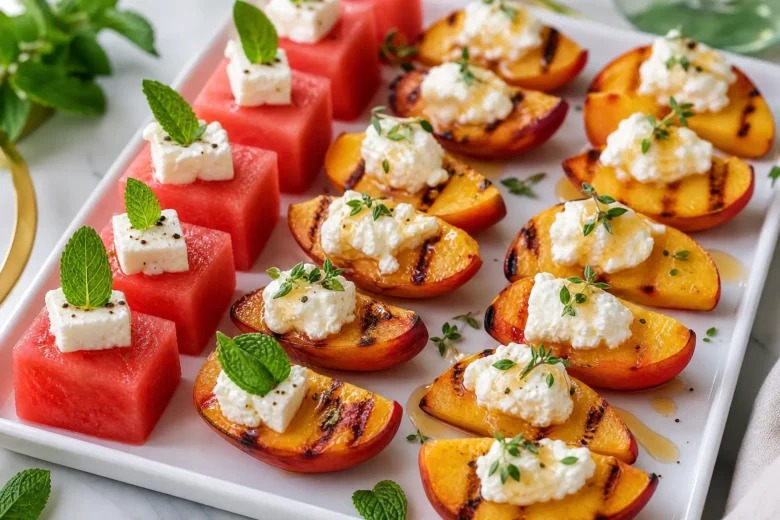
3. What are the best fruits for savoury appetisers beyond the five used in this guide? Stone fruits are exceptional in savoury appetiser contexts — sliced fresh peach or nectarine with burrata, prosciutto, and basil is one of summer’s great pleasures. Pear with blue cheese and candied walnut on crostini is magnificent in autumn. Blood orange segments with fennel, olive oil, and shaved Parmesan make a stunning winter appetiser. Watermelon with feta, mint, and a drizzle of chilli oil is a bold, refreshing summer bite. The principle is always the same: pair sweet or complex fruit with something salty, creamy, or sharp for maximum contrast and impact.
4. How do I keep cut fruit looking fresh and vibrant at a party? Acid is your best friend. Toss cut fruit in a small amount of citrus juice (lemon, lime, or orange) immediately after cutting — the acid slows oxidation and keeps the fruit looking bright and fresh. For avocado-based preparations, press plastic wrap directly onto the surface of the cut avocado or salsa. Keep assembled fruit appetisers refrigerated until 20–30 minutes before serving, and don’t assemble crostini or phyllo cups until close to serving time to prevent the bases from softening.
5. Are these recipes suitable for large groups or outdoor summer parties? All five recipes scale well for larger groups — simply multiply the quantities proportionally. For outdoor summer parties, the melon and prosciutto skewers and mango avocado salsa cups are particularly well-suited as they require no last-minute hot preparation and hold up well in warm temperatures. For the hot preparations (phyllo cups, any baked crostini), consider setting up a small station where you can bake and bring them out in batches rather than all at once — guests love the anticipation of fresh-baked appetisers arriving at the table throughout the evening.